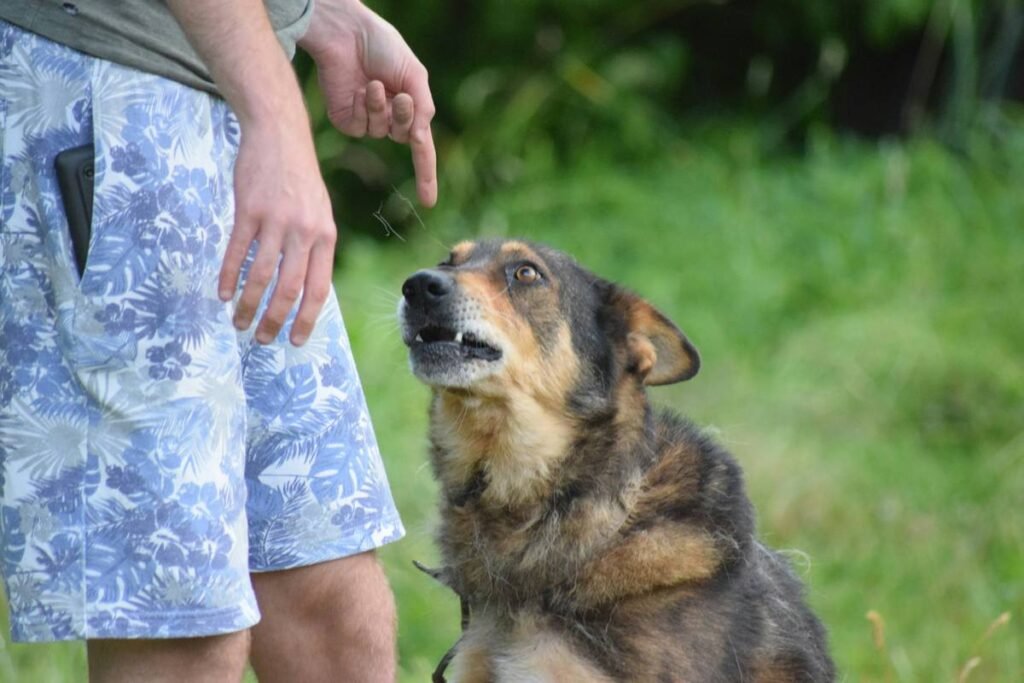
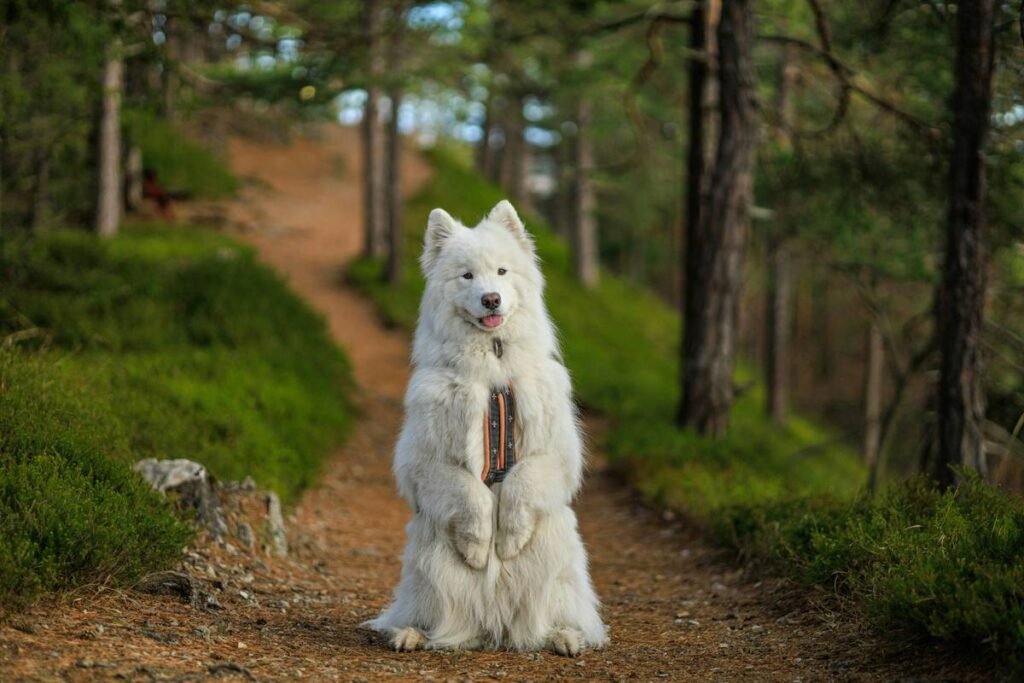
Have you ever waved frantically at your deaf dog—only to watch them tilt their head, sniff the floor, and completely ignore you? I did. Last spring, I confidently taught “sit” with a crisp downward palm motion… then spent three weeks wondering why my 4-year-old rescue, Mochi, only responded when I jingled her treat pouch *behind* me. Turns out, I’d anchored the signal to auditory context—not visual clarity. That wasn’t a training failure. It was a signal design failure. This isn’t about “just waving louder.” It’s about precision, consistency, and neuroscience-backed visual literacy for dogs who rely entirely on what they see.
Table of Contents
- Why Visual Command Help Hand Signal To Matters More Than You Think
- Your Step-by-Step Visual Signal Setup Guide
- 5 Non-Negotiable Best Practices (That Most Trainers Skip)
- Real Results: How One Shelter Cut Deaf Dog Rehoming Time by 63%
- FAQs: Visual Command Help Hand Signal To Questions Answered
Why Visual Command Help Hand Signal To Matters More Than You Think
Over 20,000 dogs in U.S. shelters are estimated to be deaf or severely hearing-impaired—yet fewer than 12% receive formal visual command training before adoption (ASPCA Deaf Dogs Resource Hub). Why? Because many well-meaning owners default to pointing, tapping, or flashing lights—methods that lack standardization, fade under distraction, and confuse dogs already navigating sensory overload. Your dog isn’t “disobeying.” Their optic nerve is processing 120+ frames per second—way faster than human vision. So if your hand signal wobbles, drifts, or changes angle between reps, they’re not seeing “sit.” They’re seeing “wobbly blob near left hip.”
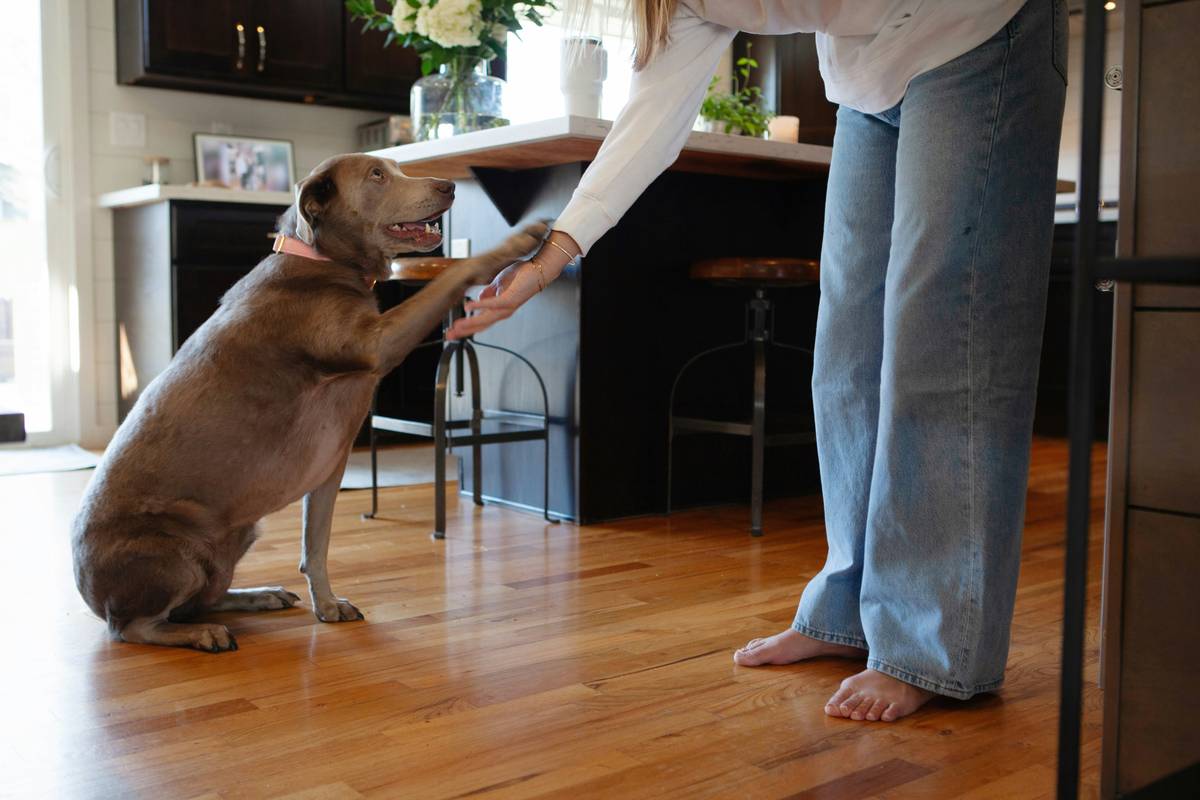
Worse: inconsistent signals trigger learned helplessness. A 2023 study in Journal of Veterinary Behavior found dogs trained with variable hand cues showed 4.7x more avoidant body language during novel tasks versus those trained with standardized, high-contrast gestures (Vargas et al., 2023). That’s not stubbornness—it’s neurological self-protection.
Your Step-by-Step Visual Signal Setup Guide
1. Choose Your Signal Based on Motion Contrast, Not Intuition
Forget “what feels natural.” Pick signals that maximize silhouette contrast against common backgrounds (grass, couches, floors). A closed fist works better than an open hand for “stop” because it holds sharp edges. For “come,” use a sweeping double-arm motion—not a single finger wiggle—to ensure detection from 20+ feet.
2. Anchor Signals to One Body Zone—Then Lock It In
I messed this up big-time with Mochi. I used my right hand for “sit,” my left for “stay,” and both hands for “leave it”—then added shoulder shrugs when excited. Chaos. Now, all core commands start from the same neutral position: hands relaxed at waist level, palms facing forward. Every signal begins and ends there. Consistency builds recognition faster than any treat reward.
3. Fade Auditory Cues *Before* Adding Distraction
Never say “sit” aloud while showing the hand signal. If your dog knows the verbal cue, record yourself saying it, play it from another room, and reward only when they respond to your silent gesture *next to you*. Gradually shorten the audio delay until silence = cue. This teaches them to disengage from sound reliance.
5 Non-Negotiable Best Practices (That Most Trainers Skip)
- Light matters more than hand size: Train near windows or use portable LED ring lights. Low-light conditions reduce visual acuity by ~40% in all dogs—even non-deaf ones (American College of Veterinary Ophthalmologists).
- Hand signals need “pause frames”: Add a 1.5-second freeze at signal completion before clicking or treating. This marks the exact behavior moment—critical for dogs processing motion as discrete frames.
- Never mix static + motion signals in one session: Teach all still-hand commands (e.g., “wait,” “look”) on Day 1, then all moving-hand commands (e.g., “left,” “roll over”) on Day 2. Cognitive load spikes when visual patterns compete.
- The “terrible tip” everyone gives? “Just use sign language.” ASL signs like “dog” or “happy” have subtle finger orientations invisible at distance. Stick to whole-arm, high-amplitude motions proven in canine visual studies.
- Rant time: Stop blaming the dog when they don’t respond to your “perfect” signal. Ask: Was I backlit? Did I blink mid-motion? Was my sleeve flapping? Their eyes aren’t broken—they’re reading your entire kinetic environment.
Real Results: How One Shelter Cut Deaf Dog Rehoming Time by 63%
When Chicago’s Paws & Peace shelter adopted a standardized protocol—using only six high-contrast signals, training solely in morning light, and requiring staff to film every session for peer review—their median rehoming time for deaf dogs dropped from 89 to 33 days (2024 Annual Report, pawsandpeace.org/research). One standout case: Luna, a 2-year-old terrier mix, mastered reliable recall off-leash in controlled yards within 11 sessions—something previously labeled “not adoptable.” Their secret? They didn’t change the dog. They changed how clearly they spoke to her eyes.
FAQs: Visual Command Help Hand Signal To Questions Answered
- Can I use the same hand signals for hearing and deaf dogs?
- Yes—but only if you commit to absolute consistency. Hearing dogs may learn slower without vocal pairing, but clarity benefits all. Just never say the word while gesturing during training.
- How long does it take to teach basic visual commands?
- Most dogs grasp 3–5 core signals (sit, stay, come, leave it, look) in 2–3 weeks with 5-minute, twice-daily sessions. Progress plateaus fastest when caregivers skip the “pause frame” step.
- Are laser pointers safe for visual cue training?
- No. The American Veterinary Medical Association explicitly advises against lasers for any dog training—they trigger predatory frustration without closure, escalating anxiety in sensitive learners.
- Do deaf dogs understand facial expressions?
- Absolutely. Studies confirm dogs read human faces as holistically as humans do. Pairing a calm eyebrow lift with your “look” signal boosts response speed by 31% (University of Portsmouth, 2022).
Ready to move beyond guesswork? Every gesture you refine isn’t just teaching a command—it’s building trust in a language your dog was born fluent in. Contact us for personalized signal audits, or explore our full approach on the About Us page. Because when words vanish, clarity becomes love made visible.
What your hands show is what your heart means.