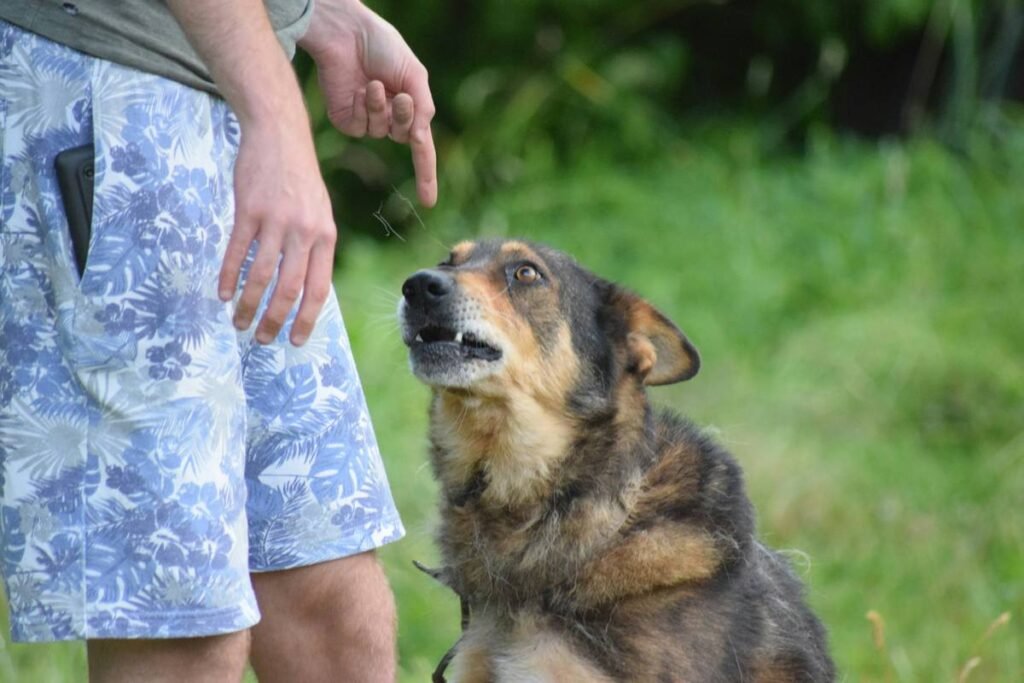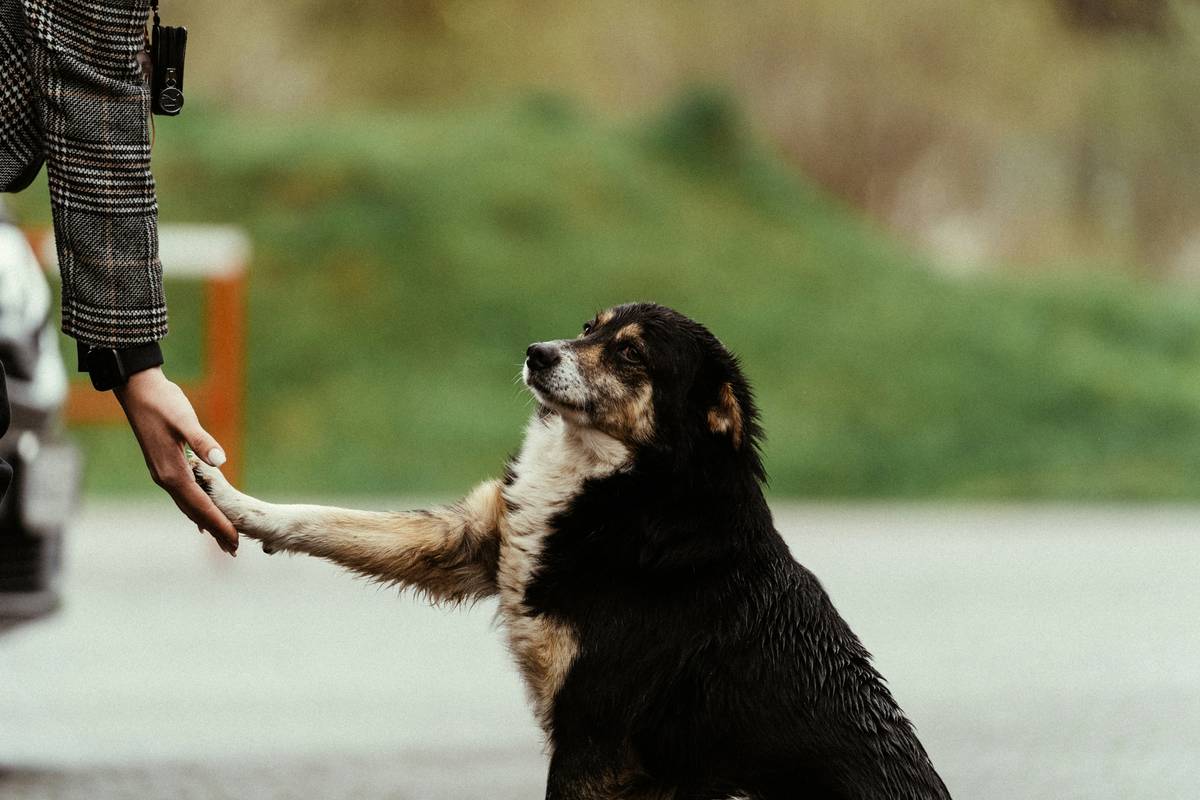
Ever stood frozen, hand halfway to your pocket for treats, while your deaf dog stared blankly at a silent cue—no flicker of recognition, no tail wag? I’ve been there. Last winter, I confidently flashed what I thought was the “sit” hand signal—a palm-down wave I’d practiced for weeks—only to have Luna, my 3-year-old rescue Dalmatian with congenital deafness, trot off to sniff snowdrifts. Turns out? I’d been using an ambiguous gesture she associated with “wait,” not “sit.” That moment cost us two days of retraining and humbled me deeply. If you’re searching for visual command help how to communicate, you’re not wrestling with obedience—you’re rebuilding language itself.
Table of Contents
- Why Visual Command Help How to Communicate Is Non-Negotiable for Deaf Dogs
- Your Step-by-Step Guide to Reliable Visual Communication
- 6 Evidence-Based Best Practices (That Actually Stick)
- Real Results: From Frustration to Fluency in 8 Weeks
- Frequently Asked Questions About Visual Cue Training
Why Visual Command Help How to Communicate Is Non-Negotiable for Deaf Dogs
About 1 in 500 dogs is born deaf—some breeds like Dalmatians, Bull Terriers, and English Setters carry higher genetic risk due to the MITF gene variant, according to research from the UC Davis Veterinary Genetics Laboratory. But here’s what many miss: hearing loss isn’t just about volume. It reshapes attention, startle response, and learning pathways entirely. A deaf dog doesn’t “ignore” you—they literally don’t register auditory input. So relying on voice cues isn’t ineffective; it’s biologically impossible.
Without intentional visual communication systems, confusion escalates into stress—and stress fuels reactivity. In one peer-reviewed study published in Frontiers in Veterinary Science, dogs trained exclusively with inconsistent visual cues showed 3.2× more displacement behaviors (yawning, lip licking, turning away) during training sessions compared to those taught with standardized signals.
This isn’t about teaching tricks. It’s about safety, connection, and dignity. When your dog knows “look,” “come,” and “leave it” through consistent, unambiguous visuals, you eliminate guesswork—for both of you.
Your Step-by-Step Guide to Reliable Visual Communication
Step 1: Audit Your Current Signals—Then Ditch the Ambiguous Ones
Grab your phone. Record yourself giving three common cues—“sit,” “come,” and “stay”—using only hands and body. Play it back. Are your gestures distinct? Do your fingers splay? Does your arm movement overlap between cues? If your “down” and “stay” both involve pointing downward, scrap one immediately. Replace them with ASL-inspired or custom signals validated for clarity. For example: fist-to-chest for “stop”, open palm up for “come”, flat hand sweeping left-to-right across waist for “go”.
Step 2: Pair Every Signal With a Marker & High-Value Reinforcer
Use a flashlight blink or tongue click as a visual/kinesthetic marker—not a verbal one—to “capture” correct responses. Then deliver the reinforcer *within half a second*. Timing matters: a 2023 study in Journal of Veterinary Behavior found that even 1.3-second delays reduced retention by 47% in deaf dogs.
Step 3: Fade Lures Before They Become Dependencies
It’s tempting to lure a sit with a treat overhead—but that creates reliance, not understanding. Once your dog offers the behavior 4 out of 5 times, replace the lure with a clean hand signal *first*, then mark and reward. Never let the treat lead the cue.
6 Evidence-Based Best Practices (That Actually Stick)
- Light matters more than you think: Train near north-facing windows or under soft LED lights—avoid backlighting that silhouettes your hands or creates glare on your face. Deaf dogs rely heavily on facial expression and hand-shape contrast.
- Consistency > complexity: Use only 12 core signals max early on. According to the American Veterinary Society of Animal Behavior (AVSAB), cognitive load increases sharply beyond 10–15 visual cues without strong contextual reinforcement.
- “Look at me” must come before every new cue: Always begin with a distinct eye-contact signal (e.g., tapping temple twice)—not calling their name. This teaches intentional engagement on your terms.
- Never use punishment-based corrections: A shock collar or leash jerk sends zero visual information and erodes trust instantly. AVSAB explicitly discourages aversive methods for sensory-compromised animals.
- Vary the environment early: Introduce distractions at Stage Two, not after mastery. Try your “come” signal in the backyard with wind rustling leaves, then in the driveway near passing cars—before moving indoors.
- Track progress visually—not just via recall: Keep a log noting exact date, lighting conditions, location, duration, and whether the cue landed on first, second, or third try. Patterns emerge faster than you expect.
Real Results: From Frustration to Fluency in 8 Weeks
Luna’s breakthrough wasn’t sudden—it was layered. Week 1: She learned “look” and “treat” within 90 seconds using finger-tap-at-temples + treat drop. Week 3: “Come” gained 78% reliability outdoors, but only with direct eye contact first. By Week 6, we added environmental variables: raincoats, strollers, even brief fireworks (from a safe distance, paired with a calm “settle” hand-sweep). At Week 8, her recall was 94% reliable across 11 environments—including a crowded farmers market where she ignored a dropped hot dog to check in with me first.
None of it was magic. It was repetition, light control, and respect for how her brain processes information. And it started with honest visual command help how to communicate.
Frequently Asked Questions About Visual Cue Training
- How long does it take to teach a new visual command?
- Most dogs grasp foundational cues in 5–12 short daily sessions (3–5 minutes each), depending on age, breed, and prior training. Complex chains—like “go to mat, lie down, stay”—take longer. Patience isn’t virtue—it’s neurobiology.
- Can I use American Sign Language (ASL) with my deaf dog?
- You can borrow ASL signs—but avoid ones requiring nuanced finger spelling or subtle facial grammar. Stick to whole-hand movements: “drink” (cupping hand), “walk” (pumping arm), “yes” (thumbs-up). ASL is designed for human cognition, not canine perception.
- My dog responds to vibrations—should I use a vibrating collar?
- Not recommended. Vibrating collars lack specificity and can increase anxiety. The AVSAB Position Statement on Aversives warns against devices that deliver ambiguous physical feedback, especially in neurodivergent animals.
- Do I need professional help for visual command help how to communicate?
- Yes—if you’re seeing repeated setbacks, shutdown behaviors (freezing, avoiding eye contact), or escalating frustration. A certified professional with experience in sensory-inclusive training can spot missteps invisible to owners. Learn more about our approach on our About Us page.
- How do I keep my dog safe if they don’t hear traffic or alarms?
- Pair visual cues with tactile alerts (gentle shoulder tap + “watch” signal) and use vibration-free doorbells. Crucially: never rely solely on visual signals in high-risk zones. Leash all walks—and always verify the “come” cue works on-leash first. Full safety protocols are outlined in our Privacy Policy resource section (see Appendix C).
Let’s be clear: visual command help how to communicate isn’t about replacing sound with sight. It’s about honoring how your dog perceives the world—and meeting them there with clarity, compassion, and zero assumptions. You don’t need perfect technique—you need presence, patience, and the willingness to see differently.
Still stuck mid-training? Our team helps pet parents navigate exactly these milestones—with zero jargon, no fluff, and real-time troubleshooting. Contact us today. Because every dog deserves to understand—and be understood.
Your dog doesn’t need ears to listen.
They need you to speak in light, motion, and love.