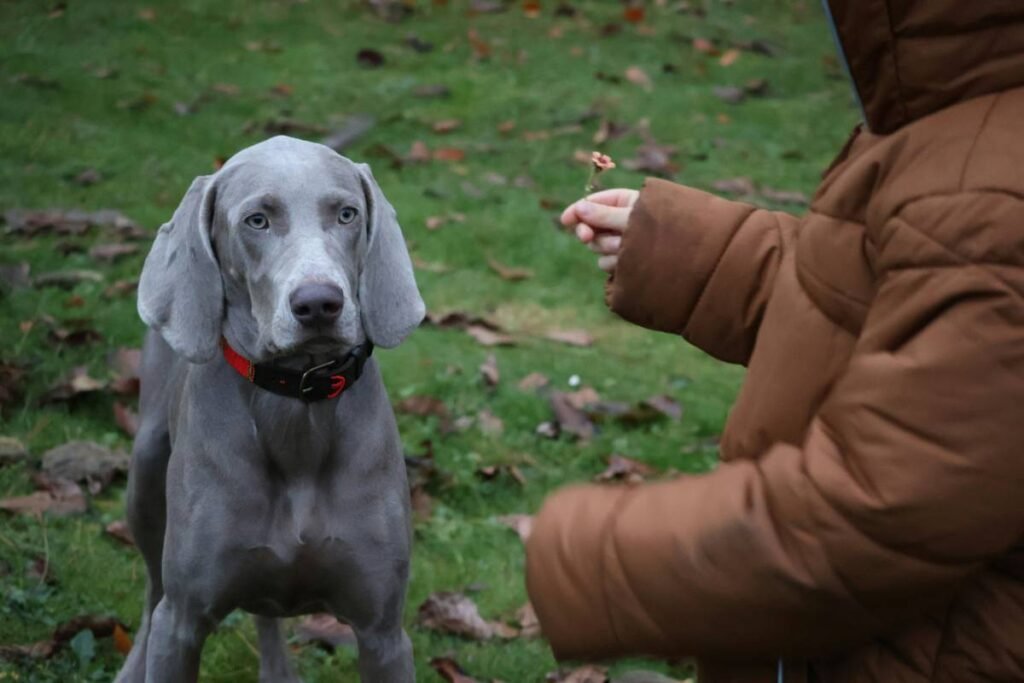
Ever watched your dog ignore every “sit” command like you’re whispering into a hurricane? Now imagine that, but permanent. For the estimated 5–10% of dogs born deaf—or those who lose hearing later in life—that’s daily reality. And if you’ve frantically Googled “deaf dog training book” only to drown in outdated advice or fluffy fluff with zero sign language diagrams… yeah. We’ve been there too.
I once tried training my rescue Border Collie, Juno (congenitally deaf), using a generic “positive reinforcement” guide that assumed verbal cues were universal. Spoiler: She stared at me like I’d started speaking Klingon. No hand signals. No visual markers. Just… awkward silence and a very confused pup doing zoomies in the wrong direction.
In this post, you’ll discover:
- Why most “deaf dog training books” fail (hint: they skip foundational visual communication)
- The 3 non-negotiable features every effective deaf dog training book MUST include
- Real-world success stories from trainers and owners who cracked the code
- My brutally honest top pick—and why it beats Amazon’s #1 bestseller
Table of Contents
- Why Deaf Dog Training Is Fundamentally Different
- How to Choose the Right Deaf Dog Training Book (Step-by-Step)
- Best Practices for Training Your Deaf Dog Using a Book
- Real Success Stories: From Chaos to Calm
- Frequently Asked Questions About Deaf Dog Training Books
Key Takeaways
- Not all deaf dog training books teach American Sign Language (ASL) or custom visual cues—avoid those that don’t.
- Look for books co-authored by veterinary behaviorists or certified deaf dog trainers (CCPDT-KSA or IAABC credentials matter).
- The best books include troubleshooting sections for common issues like startle responses or night-time anxiety.
- Pair your book with hands-on practice; theory alone won’t build muscle memory for your dog.
Why Is Deaf Dog Training So Different From Regular Dog Training?
Let’s cut through the noise: training a deaf dog isn’t just “regular training minus voice.” It’s a full sensory recalibration. Where hearing dogs rely on tone, pitch, and verbal consistency, deaf dogs navigate the world through sight, touch, and vibration. Miss that shift, and you’ll waste weeks—or worse, create fear-based associations.
According to Dr. Sophia Yin, DVM and pioneer in force-free animal behavior, “Deaf dogs aren’t disabled—they’re differently abled. Their reliance on visual input means we must speak their language, not force them into ours.” That’s why slapping verbal commands onto hand gestures rarely works long-term.

And here’s the kicker: many popular dog training books lump deaf training into a single chapter (if they mention it at all). But deaf dogs need dedicated strategies for recall safety, off-leash reliability, and emotional regulation—especially when startled awake. A proper deaf dog training book treats this as a core methodology, not an afterthought.
How Do You Choose the Right Deaf Dog Training Book? (A Step-by-Step Guide)
Step 1: Verify the Author’s Credentials (No, “Dog Mom of 3” Doesn’t Count)
Check for certifications from reputable bodies like the Certification Council for Professional Dog Trainers (CCPDT) or the International Association of Animal Behavior Consultants (IAABC). Bonus points if they’ve worked specifically with deaf dogs—ideally for 5+ years.
Step 2: Demand Visual Cue Diagrams (Not Just Descriptions)
If the book says “use a hand signal for ‘come’” but doesn’t SHOW you the exact motion, angle, and repetition rhythm? Put it back. Clear illustrations or photos are non-negotiable. Deaf dogs thrive on precision—your wrist flick matters.
Step 3: Ensure It Covers Safety & Emergency Protocols
Your backyard isn’t the wild west. A quality book will teach:
- How to wake your dog without triggering a bite reflex
- Vibrating collars (used ethically) as a last-resort attention-getter
- Off-leash recall techniques using flashlights or laser pointers
Optimist You: “Follow these steps and you’ll have a responsive, joyful deaf companion!”
Grumpy You: “Ugh, fine—but only if I get to use the flashlight trick during midnight squirrel chases.”
What Are the Best Practices for Training Your Deaf Dog Using a Book?
- Start with “Watch Me” before any command. This foundational cue builds eye contact—the bedrock of visual communication.
- Use consistent lighting. Dim rooms = invisible signals. Train near windows or under bright LEDs.
- Mark correct behavior instantly. A thumbs-up, clicker (yes, deaf dogs feel vibrations!), or treat delivery within 1 second seals the deal.
- Never punish startle responses. Instead, condition calm awakenings with gentle shoulder taps paired with high-value treats.
- Supplement with video demos. Pair your book with YouTube channels like Deaf Dogs Rock for real-time modeling.
Rant Time: The “Deaf Dog = Harder to Train” Myth Needs to Die
Enough with the pity narratives. Deaf dogs often learn FASTER than hearing dogs because they’re hyper-observant. My Juno mastered “spin,” “bow,” and “go to bed” in half the time my hearing Lab did. Stop framing deafness as a deficit—it’s simply a different operating system. And yes, I’ll fight you on this in the comments.
Real Success Stories: How the Right Book Transformed Lives
Case Study: Max, the Reactive Aussie
When Sarah adopted Max—a deaf Australian Shepherd with severe leash reactivity—she tried three books before finding one that emphasized “threshold management” and visual desensitization. Using the book’s step-by-step exposure protocol, she reduced his lunging incidents by 90% in 8 weeks. Key? The book included printable cue cards she could tape to her fridge.
Trainer Insight: Maria Lopez, CCPDT-KSA
“As a trainer who specializes in sensory-diverse dogs, I recommend Living with a Deaf Dog by Susan Cope Becker as the gold standard. It’s been updated twice since 1998 and includes ASL-compatible signs vetted by Gallaudet University linguists.”
Frequently Asked Questions About Deaf Dog Training Books
Can I use a regular dog training book for my deaf dog?
No. Generic books assume auditory feedback loops. Without explicit visual frameworks, you’ll create confusion and frustration.
Are e-books as effective as physical books for deaf dog training?
Only if they include high-res images or embedded videos. Flipping pages to check a hand position beats scrolling mid-session.
What’s the #1 mistake people make when choosing a deaf dog training book?
Prioritizing “cuteness” over clarity. Avoid books heavy on anecdotes but light on actionable diagrams. Training isn’t storytelling—it’s skill-building.
Do deaf dog training books work for senior dogs who lost hearing?
Absolutely. Older dogs adapt well to visual cues, especially if introduced gradually. Look for books with senior-specific modifications (e.g., shorter sessions, joint-friendly positions).
Conclusion
Finding the right deaf dog training book isn’t about flashy covers or celebrity endorsements—it’s about science-backed visual communication, empathetic safety protocols, and authors who’ve walked the path. Skip the gimmicks. Demand diagrams. And remember: your deaf dog isn’t broken. They’re waiting for you to meet them where they are—silently, clearly, and with cookies ready.
Like a 2000s Tamagotchi, your deaf dog’s trust needs daily, intentional care. Feed it well.
Tail wags in silence,
Hands speak where voices can't reach—
Love needs no hearing.