Ever called your dog’s name—only to realize they’ll never hear you again? That gut-punch moment hit me the day my rescue pup, Jasper (a dazzling white Bull Terrier with one blue eye), failed his BAER hearing test. I’d spent weeks trying to “fix” his so-called disobedience… only to learn he wasn’t ignoring me—he couldn’t hear me.
If you’re here, you’ve likely faced that same heart-squeeze. Good news: deaf dog training isn’t just possible—it’s deeply rewarding. In this guide, we’ll cover everything from foundational hand signals to emergency recall protocols, backed by veterinary behaviorists, real-world fails (like the time I accidentally taught Jasper to “sit” while sneezing), and science-backed methods. You’ll walk away knowing how to communicate clearly, build trust, and keep your deaf dog safe in a hearing world.
Table of Contents
- Why Deaf Dog Training Matters More Than You Think
- Step-by-Step Deaf Dog Training: Start Here
- 5 Best Practices for Long-Term Success
- Case Study: Turning Panic into Partnership
- Frequently Asked Questions About Deaf Dog Training
Key Takeaways
- Over 5% of dogs show some degree of congenital deafness—higher in breeds like Dalmatians, Bull Terriers, and Australian Shepherds (UC Davis Veterinary Medicine).
- Deaf dogs rely on visual cues; consistent hand signals are non-negotiable.
- Vibration collars (not shock!) can be humane tools for distance communication when used correctly.
- Never punish startle responses—build trust through positive reinforcement only.
- Emergency recall isn’t optional—it’s a safety lifeline.
Why Deaf Dog Training Matters More Than You Think
Let’s get brutally honest: many shelters euthanize deaf dogs due to “behavioral issues”—which are almost always just communication breakdowns. According to the UC Davis School of Veterinary Medicine, up to 30% of Dalmatians are born deaf in one or both ears. Yet these dogs aren’t “defective.” They’re brilliant, alert, and capable of full, joyful lives—with the right training.
The real danger? A deaf dog startled awake might snap out of fear—not aggression. Or worse, bolt into traffic because they didn’t hear your call. That’s why specialized training isn’t “nice-to-have”—it’s life-or-death.
Optimist You: “This is manageable! We’ve got this.”
Grumpy You: “Ugh, fine—but only if coffee’s involved and no one yells ‘surprise!’ near my sleeping pup.”
Step-by-Step Deaf Dog Training: Start Here
How do I get my deaf dog’s attention without startling them?
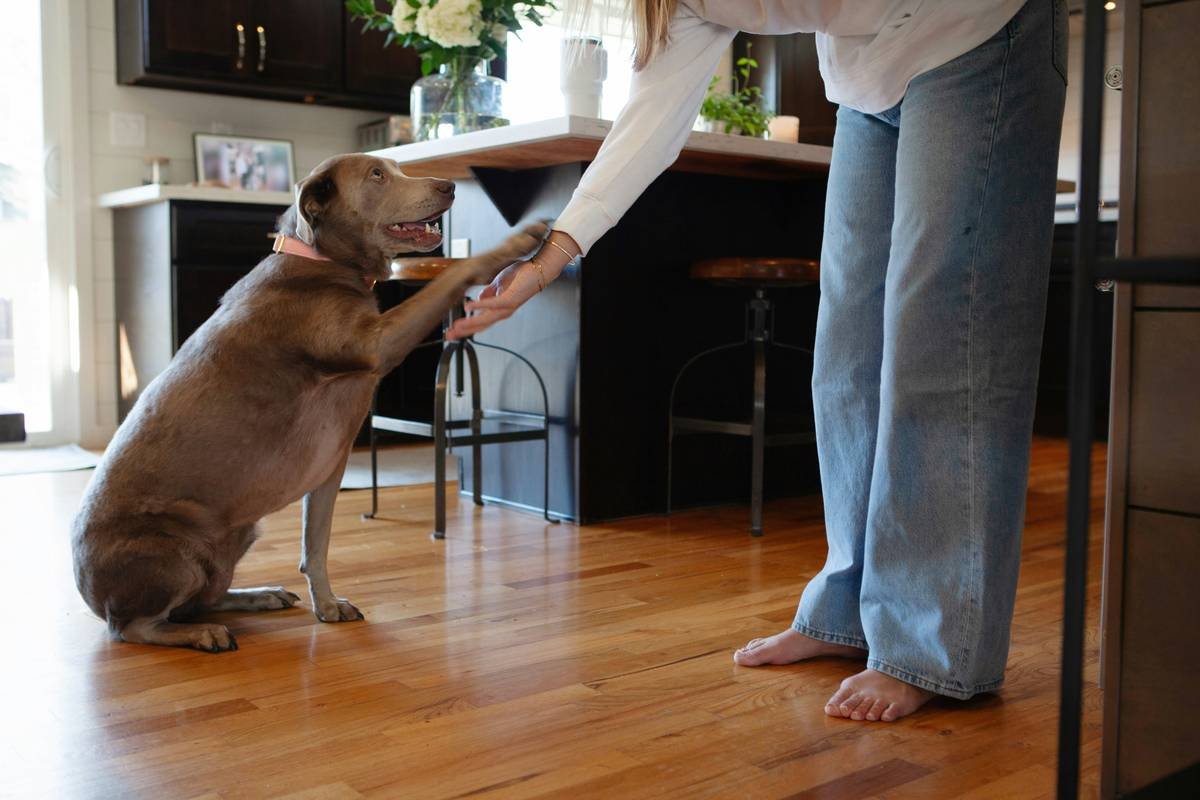
Approach from the front whenever possible. Gently tap the floor to create vibrations, stomp lightly, or wave your hand in their line of sight. Never grab or shake them awake—that builds fear, not trust.
What hand signals actually work?
Ditch vague gestures. Use crisp, distinct motions:
- Sit: Flat palm down, sweep upward.
- Stay: Open palm forward (like a stop sign).
- Come: Swipe hand diagonally across chest toward your heart.
Pro tip: Pair each signal with a high-value treat (think boiled chicken, not kibble) until the behavior sticks.
How do I teach an emergency recall?
This is your #1 priority. Use a unique signal—like turning on a flashlight or tapping your leg rapidly—and reward like crazy every single time. Practice in low-distraction areas first, then graduate to parks. Consistency saves lives.
Can I use a collar?
Yes—but choose wisely. A vibration-only collar (like the PETMEMO Rechargeable Vibration Collar) can cue your dog from afar. Never use shock or static. The goal is communication, not correction.
5 Best Practices for Long-Term Success
- Always ID your dog: Tag says “DEAF – CANNOT HEAR” with your phone number. Microchip too.
- Leash in unfenced areas: Even well-trained deaf dogs can’t hear cars, bikes, or off-leash chaos.
- Use a long line for freedom: A 30-foot leash lets them explore safely while you maintain control.
- Brighten their world: Reflective gear at night, vibrant vests during the day—make them visible.
- Never scold startle reactions: Replace fear with positive associations using treats and calm redirection.
Optimist You: “Consistency breeds confidence!”
Grumpy You: “Yeah, yeah—just tell me how to stop tripping over this 30-foot leash at 6 a.m.”
Beware the Terrible Tip™
❌ “Just use shock collars—they’ll learn faster.”
NO. Shock causes pain-based compliance, erodes trust, and increases anxiety in deaf dogs who already live in a silent, unpredictable world. Stick to force-free, reward-based methods endorsed by the American Veterinary Society of Animal Behavior.
Case Study: Turning Panic into Partnership
Meet Luna, a 2-year-old deaf Australian Shepherd surrendered to a Texas rescue after “biting” when woken suddenly. Her new owner, Maria, reached out to me after weeks of sleepless nights.
We started simple: Maria learned to approach Luna’s crate with a gentle foot-tap. Then, she introduced a flashlight as Luna’s “come” cue. Within three weeks, Luna responded reliably—even during squirrel attacks.
Six months later? Luna passed her CGC (Canine Good Citizen) test with flying colors. Maria’s secret? “I stopped seeing her deafness as a flaw. It made us listen to each other in a whole new way.”
Frequently Asked Questions About Deaf Dog Training
Can deaf dogs go off-leash safely?
Only in fully enclosed areas with zero escape risk. Even then, practice emergency recall daily. Traffic noise, wildlife, and sudden movements are invisible dangers.
Do deaf dogs bark less?
Not necessarily! Barking is visual/social. Many deaf dogs bark *more* to get attention. Redirect with a “quiet” hand signal paired with treats.
Is it harder to train a deaf puppy vs. an adult dog?
Puppies adapt faster, but adults learn quicker due to focus. Either way, use short (3–5 min), frequent sessions with high-value rewards.
Can two-deaf-ear dogs live normal lives?
Absolutely. With structure, clear signals, and environmental management, bilaterally deaf dogs thrive as family pets, therapy dogs, and even agility competitors.
Conclusion
Deaf dog training isn’t about fixing what’s “missing”—it’s about building a richer language of trust, touch, and vision. You don’t need perfect hand signals on day one. You just need patience, consistency, and the willingness to see the world through their eyes.
Jasper? He now naps at my feet while I type this—startled only by the whirrrr of my laptop fan (which sounds suspiciously like a vacuum). But when I flash my fingers twice? He bolts to my side, tail wagging like a metronome set to “joy.”
And that’s the real win—not obedience, but connection.
Like a Tamagotchi, your bond needs daily care.
Feed it with signals.
Water it with play.
And never let it beep unanswered.