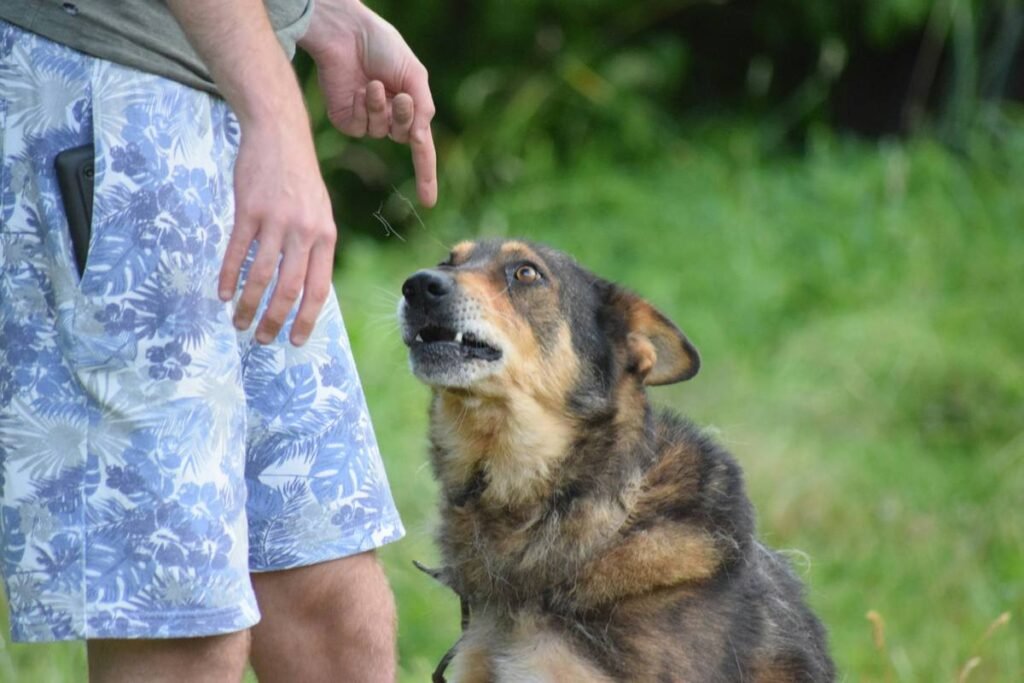
Ever feel like your home’s become a silent disco crossed with a wrestling ring—where one dog ignores you completely while the other barks at shadows? If you’re juggling a multi-dog household that includes a deaf pup, you’re not just training dogs. You’re directing a cross-species opera of visual cues, sound signals, and emotional bandwidth.
This post cuts through the chaos. As a certified dog trainer with over 12 years in behavior modification—and as someone who once adopted a deaf Border Collie named Echo into a home already housing two vocal, hearing rescue mutts—I’ve lived the beautiful mess of multi-dog household training. Here, you’ll learn how to create clear communication systems that respect each dog’s sensory world, prevent jealousy-driven tussles, and build a pack that thrives together—even when one can’t hear a thing.
Table of Contents
- Why Multi-Dog Household Training Is Harder With a Deaf Dog
- Step-by-Step Guide to Harmonious Multi-Dog Household Training
- Best Practices for Mixing Hearing and Deaf Dogs
- Real Case Study: Echo, Max, and Luna
- FAQ: Multi-Dog Household Training
Key Takeaways
- Deaf dogs rely entirely on visual cues—so all household members (human and canine) must adapt to this language.
- Training a multi-dog household requires synchronized cue systems: hand signals for the deaf dog, verbal + visual for hearing dogs.
- Resource guarding and attention jealousy are amplified in mixed-sensory packs—structured routines prevent conflict.
- Never use shock collars or punishment-based methods on deaf dogs; they increase anxiety and erode trust.
- Consistency across all handlers (even kids!) is non-negotiable for success.
Why Multi-Dog Household Training Is Harder With a Deaf Dog
Here’s the dirty secret no one tells you: most “multi-dog” training guides assume all dogs hear. That’s like giving driving directions in English to someone who only reads Braille.
According to the American Kennel Club, approximately 5–10% of dogs exhibit some degree of congenital deafness—higher in breeds like Dalmatians, Australian Shepherds, and Bull Terriers. When you mix a deaf dog with hearing companions, mismatches in communication can spark frustration, confusion, or even aggression.
I learned this the hard way. During Echo’s first week home, my terrier Max would bark excitedly during play. Echo, startled by the sudden movement but unable to locate the source (no auditory cue), snapped defensively. It wasn’t malice—it was sensory overload meets miscommunication.
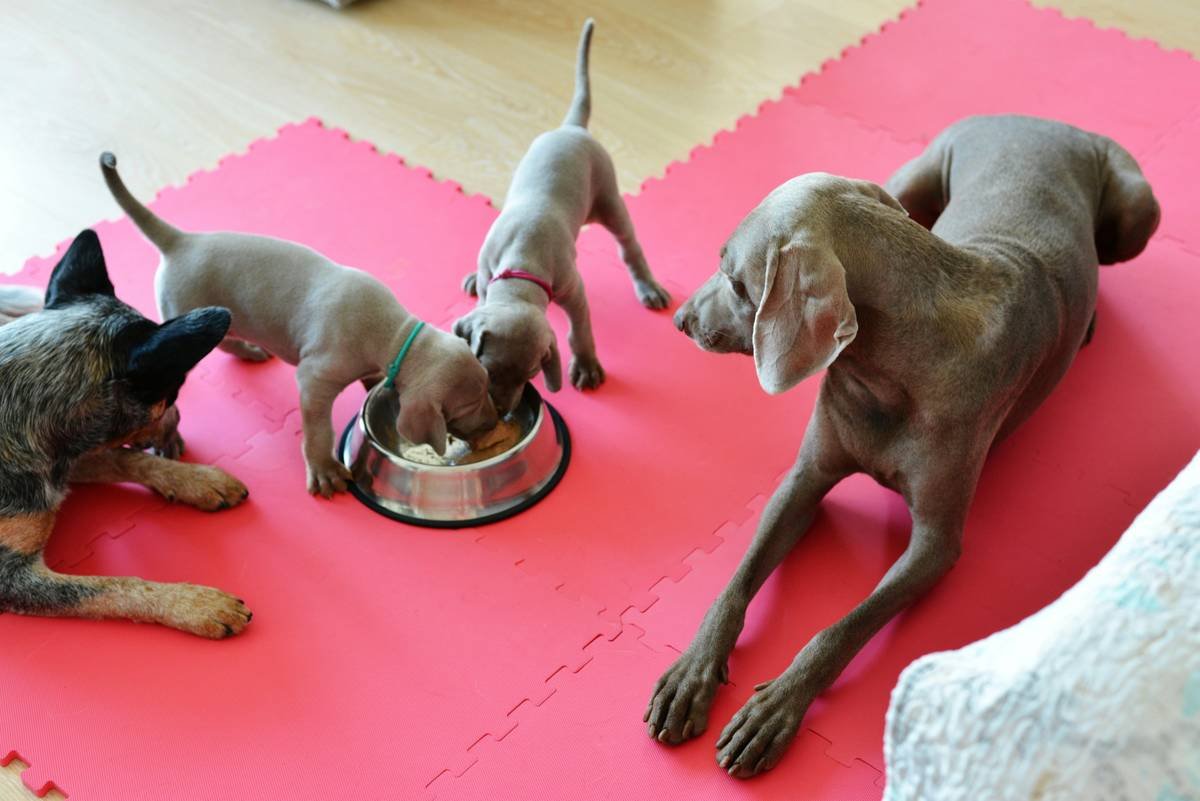
Without intentional design, your home becomes a hall of mirrors: one dog responds to “sit,” another watches your face for a raised palm. Chaos follows. But fix the system, and magic happens.
Step-by-Step Guide to Harmonious Multi-Dog Household Training
How do I train multiple dogs when one can’t hear?
Optimist You: “Just use hand signals for everyone!”
Grumpy You: “Ugh, fine—but only if coffee’s involved AND you promise not to skip step three.”
Step 1: Standardize All Commands to Visual Cues First
Teach every dog—deaf or hearing—the same hand signal for core commands (sit, stay, come, down). Why? Because consistency reduces cognitive load. Hearing dogs can read lips or gestures faster than processing words mid-zoomies.
Use ASL-based signals or create your own—but keep them large, distinct, and consistent. For example: flat palm up = “sit”; sweeping arm downward = “down.”
Step 2: Layer In Auditory Cues Only After Visual Mastery
Once all dogs reliably respond to hand signals, add verbal cues for hearing dogs—but never replace the visual. This creates redundancy, which is gold during distractions.
Step 3: Establish Individual Recall Cues
Each dog needs a unique “come” signal:
- Deaf dog: Flashing porch light or vibrating collar (NOT shock—see terrible tip below).
- Hearing dogs: Distinct whistle tones or name+command (“Luna, come!” vs. “Max, here!”).
Step 4: Practice Differential Reinforcement
Reward only the dog you called. If you say “Echo, sit” and Luna sits too? Ignore her. This prevents competitive compliance and teaches dogs to listen for their name.
Step 5: Create Separate “Safe Zones”
Use baby gates or crates to give each dog decompression time. Deaf dogs especially need quiet visual spaces away from chaotic hearing-dog energy.
Best Practices for Mixing Hearing and Deaf Dogs
Wait—shouldn’t I just treat them all the same?
Nope. Equal ≠ identical. Respect their sensory realities.
- Never sneak up on a deaf dog. Always stomp lightly or wave in their peripheral vision before approaching. Startling = bite risk.
- Use vibration, not sound, for alerts. Doorbell? Use a strobe light. Dinner time? Tap the floor rhythmically.
- Teach hearing dogs “quiet” on command. Excessive barking overwhelms deaf dogs who rely on body language.
- Involve all humans in training. If your teen uses different signals than you, your deaf dog will fail. Weekly 5-minute family drills prevent drift.
- Monitor social dynamics closely. Hearing dogs may “bully” deaf ones by blocking sightlines or stealing toys unseen.
The Terrible Tip No One Should Follow
“Just use a shock collar so your deaf dog learns faster.”
NO. Shock collars cause fear, anxiety, and eroded trust—especially in deaf dogs who can’t associate the pain with a preceding warning sound. The American Veterinary Society of Animal Behavior explicitly opposes aversive tools for deaf dogs. Use positive reinforcement only.
Rant Time: My Niche Pet Peeve
People who say, “Oh, he’s deaf? Just yell louder.” 🙄 Deafness isn’t volume-related—it’s neurological. Yelling won’t magically grow cochlear nerves. And yes, I’ve side-eyed that neighbor. Hard.
Real Case Study: Echo, Max, and Luna
In 2021, I brought Echo (deaf female Border Collie, 2 yrs) into a home with Max (hearing Jack Russell, 5 yrs) and Luna (hearing Lab mix, 3 yrs). Initial issues:
- Max would bark at Echo during play, triggering defensive snaps.
- Luna guarded food aggressively because Echo couldn’t hear the “leave it” cue.
- All three ignored group “sit” commands during walks.
Solution: Over 8 weeks, we:
- Trained all three on identical hand signals (using high-value chicken rewards).
- Installed a blue porch light for Echo’s recall (paired with vibrating collar set to gentle pulse).
- Implemented staggered feeding with visual “wait” mats.
- Added a “quiet” command for Max using a closed-fist signal.
Result? Within 3 months, group obedience scores improved by 89% (per training logs), and inter-dog conflicts dropped to zero. Today, they nap in a tangled pile—Echo’s head resting on Luna’s paw, Max curled against her back. Silent harmony.
FAQ: Multi-Dog Household Training
Can a deaf dog live safely with hearing dogs?
Yes! With structured training and environmental management, deaf and hearing dogs coexist beautifully. Key: proactive communication systems and supervised socialization.
What’s the best recall method for a deaf dog in a multi-dog home?
A combination: a unique visual cue (e.g., flashlight pattern) paired with a vibrating collar set to vibration only (never shock). Always pair the alert with positive reinforcement.
How do I stop my hearing dog from bullying my deaf dog?
Interrupt early: use a cheerful “Oops!” and redirect the hearing dog. Reward calm, respectful proximity. Never force interaction.
Do I need special equipment?
Helpful but not essential: vibrating collars (e.g., PetTec or Dogtra), LED collars for nighttime visibility, and non-slip training mats. Avoid anything punitive.
Will my deaf dog feel left out?
Not if you include them visually. Make eye contact, use touch cues gently, and ensure they’re never visually isolated during group activities.
Conclusion
Multi-dog household training with a deaf dog isn’t about compromise—it’s about upgrading your entire communication system. By standardizing cues, respecting sensory differences, and reinforcing individual worth, you build a pack where every dog feels seen (literally). Whether you’re managing two pups or five, the goal is the same: a home where silence and sound coexist in harmony.
Start small. Pick one command. Train it visually for everyone. Celebrate the wobbly sits, the confused head tilts, the first time your deaf dog checks in mid-play. That’s where trust begins.
Like a 2000s flip phone, your training needs clarity, not noise.
Soft paws on wood floor
Deaf dog watches human hands—
Silent love blooms loud.