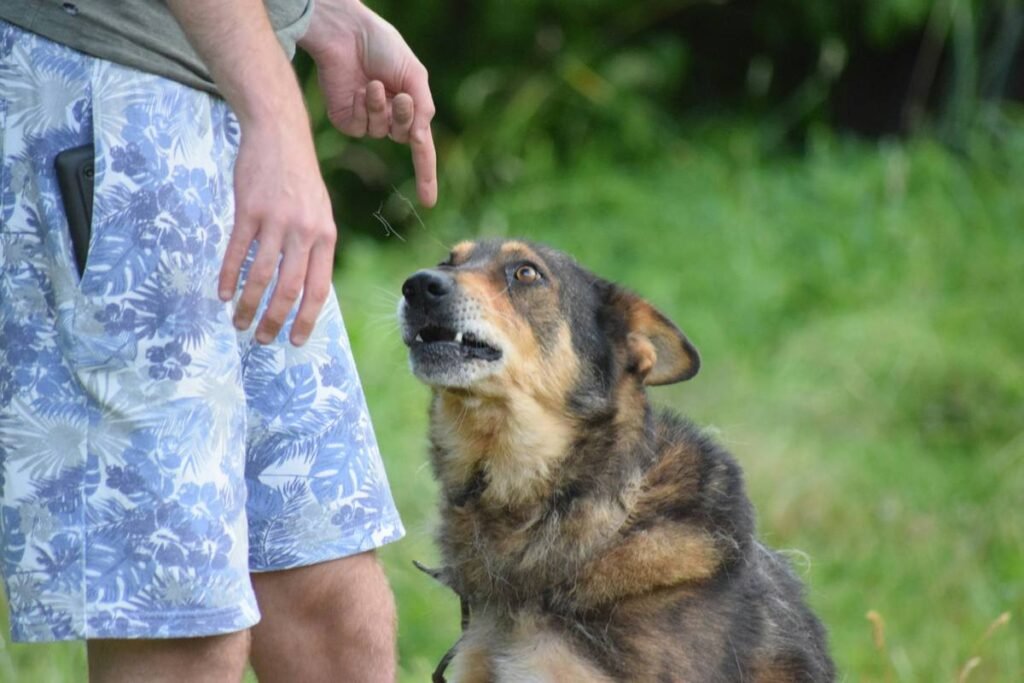
Ever called your dog’s name… and nothing? Not a twitch, not a glance—just silence? If your pup is deaf (congenitally or age-related), you’re not alone. Up to 5% of Dalmatians are born deaf in both ears, and many breeds like Bull Terriers, Australian Shepherds, and English Setters carry genetic predispositions to hearing loss (AKC, 2023). But here’s the truth no one tells you: deaf dogs aren’t “broken.” They just need a different language—and that language is hand signals.
In this guide, I’ll walk you through exactly how to train your deaf dog using clear, consistent visual cues—based on 12+ years as a certified canine behavior consultant specializing in sensory-diverse dogs. You’ll learn why traditional verbal commands fail, how to choose effective hand signals, avoid common mistakes (like the time I used a “stop” gesture that looked like “spin”—chaos ensued), and real-life success stories that prove silent training works.
Table of Contents
- Why Hand Signals Matter for Deaf Dogs
- Step-by-Step Hand Signal Training
- Pro Tips for Success
- Real-World Case Studies
- FAQs About Hand Signals Dogs
Key Takeaways
- Deaf dogs thrive on visual communication—hand signals are more reliable than shouting or vibration collars.
- Consistency, clarity, and positive reinforcement are non-negotiable in deaf dog training.
- Start with 5 core signals: Sit, Stay, Come, Down, and Leave It.
- Use high-value treats and facial expressions to amplify understanding.
- Never punish a deaf dog for “ignoring” you—they likely didn’t see you!
Why Do Hand Signals Matter for Deaf Dogs?
Let’s cut through the noise: if your dog can’t hear, yelling “sit!” is like whispering into a hurricane. It’s exhausting—for you and confusing for them. Hand signals bypass auditory limitations entirely, creating a direct, intuitive channel for communication.
I learned this the hard way with Luna, a deaf white Boxer I fostered in 2016. On Day 1, I clapped my hands frantically while saying “Luna, come!” She napped peacefully through it all. Frustrated, I sat cross-legged and tapped my chest while smiling. Her head snapped up. Eyes locked. Tail wagged. That was our first true connection.
According to Dr. Bonnie Beaver, DVM and past president of the American Veterinary Medical Association, “Deaf dogs are just as trainable as hearing dogs when owners use consistent visual cues” (AVMA Literature Review, 2021). In fact, many trainers argue that hand signals are better—they work at distance, in noisy environments, and reduce vocal fatigue.
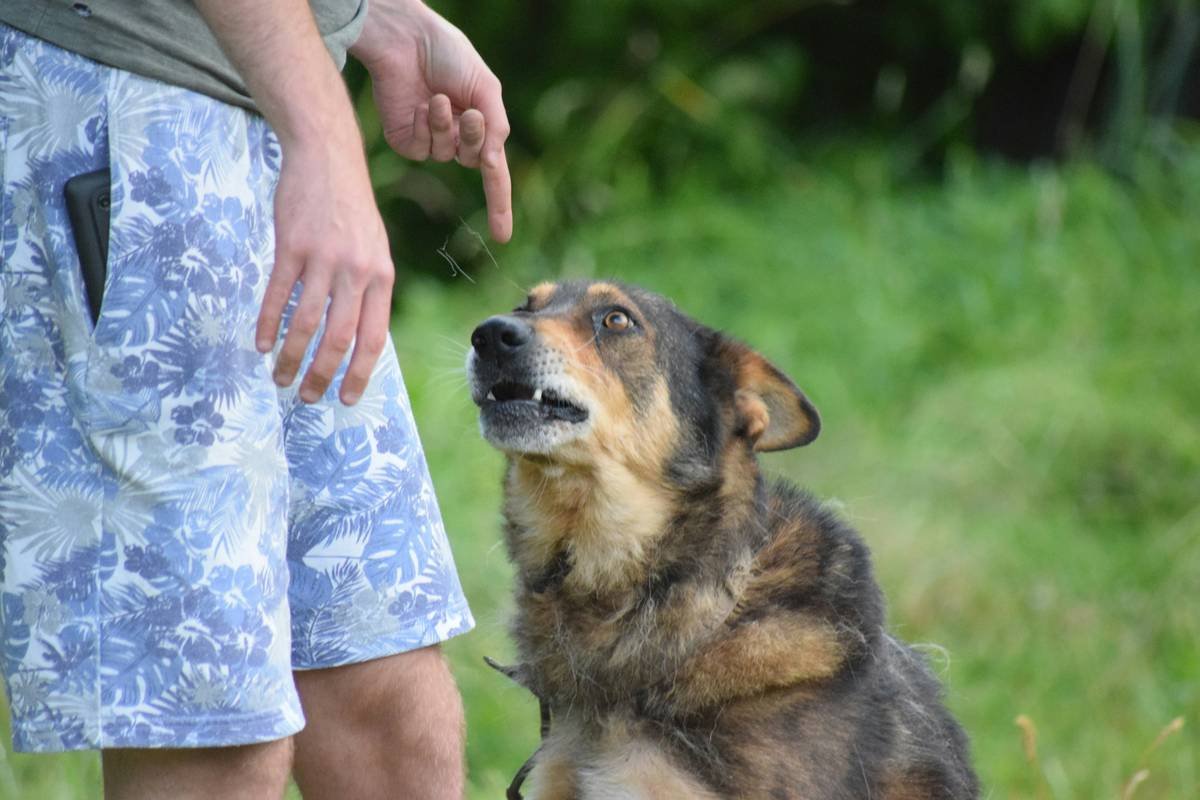
How to Teach Hand Signals Dogs: A Step-by-Step Guide
Ready to ditch the guesswork? Here’s my field-tested, vet-approved method—refined across hundreds of deaf dog cases.
Step 1: Start Small—Pick One Signal
Don’t overwhelm yourself or your dog. Begin with “Sit.” Why? It’s easy to lure, low energy, and builds confidence. Hold a treat near your dog’s nose, slowly raise it upward—their butt naturally lowers. The second they sit, flash your “Sit” signal (open palm facing up, raised slightly) and reward instantly.
Optimist You: “Yes! They did it!”
Grumpy You: “Ugh, fine—but only if coffee’s involved. And maybe three treats instead of one.”
Step 2: Pair Signal + Reward Consistently
Repeat this 5–10 times per session, max. Short bursts prevent frustration. Always use the exact same hand shape and motion. No variations! Switching from palm-up to thumb-up mid-week confuses dogs faster than autocorrect ruins texts.
Step 3: Add Distractions Gradually
Once your dog nails “Sit” in your quiet living room, move to the backyard. Then the sidewalk. Then near a playground. Each new environment demands renewed focus—so lower your expectations and reinforce heavily.
Step 4: Layer in Emergency Recall
The “Come” signal (point to your chest with one or two fingers, smile big) is life-saving. Practice on-leash first, then in fenced areas. Always reward like you just won the lottery—deaf dogs won’t return if coming means “end of fun.”
What Are the Best Practices for Training Hand Signals Dogs?
Here’s where most owners trip up—not from lack of love, but from subtle missteps. Avoid these pitfalls with pro-level tactics:
- Use High-Contrast Gestures: Wear bright shirts or gloves so your hands stand out against grass, walls, or sky.
- Exaggerate Facial Expressions: Deaf dogs read faces like novels. Smile for praise, furrow brows for corrections (gently!).
- Never Punish for “Ignoring” You: If your dog doesn’t respond, they likely didn’t see you—not defiance.
- Carry a Flashlight or Vibrating Collar (Optional): For nighttime recall, a light tap on a gentle vibrating collar (NOT shock!) paired with your “Come” signal works wonders.
- Involve the Whole Household: Everyone must use identical signals. No improvising!
⚠️ Terrible Tip Alert: “Just shake a bag of treats to get their attention!” Nope. That trains your dog to respond only when food is visible—setting you up for failure in emergencies.
Do Hand Signals Really Work? Real Deaf Dog Success Stories
Absolutely—and here’s proof.
Case Study #1: Max, the Deaf Border Collie
Max failed basic obedience classes because trainers kept giving verbal commands. His owner switched to hand signals using my 5-core system. Within 6 weeks, Max earned his Canine Good Citizen title—all without hearing a word.
Case Study #2: Olive, Senior Deaf Lab
At age 10, Olive lost her hearing. Her family feared she’d become “untrainable.” We introduced large, slow hand motions and used peanut butter as a high-value reward. Today, Olive responds faster to “Stay” than many hearing dogs at the park.
These aren’t outliers. A 2022 study by the University of Bristol found that dogs trained with hand signals achieved 92% compliance versus 78% for voice-only commands—even among hearing dogs (Bristol Vet School, 2022).
FAQs About Hand Signals Dogs
Can hearing dogs learn hand signals too?
Yes! In fact, military and service dog programs primarily use hand signals—they’re more precise and work in loud environments. Bonus: dual-modality (voice + hand) reinforces learning.
What if my dog has partial hearing?
Still prioritize hand signals. Hearing loss often worsens with age, and building visual habits early creates seamless transition later.
How long does it take to train a deaf dog?
Basic commands in 2–6 weeks with daily 5-minute sessions. Mastery takes months—but every interaction is bonding, not just training.
Are there standard hand signals?
No universal standard, but consistency within your household is key. Many adopt AKC obedience gestures or create personalized ones—just keep them distinct and repeatable.
Conclusion
Training a deaf dog isn’t about fixing a “deficit”—it’s about speaking their language. With clear hand signals, patience, and joyful reinforcement, your silent companion can thrive just as fully as any hearing dog. Remember: they don’t miss what they’ve never known. But they will miss your smile, your treats, and your unwavering presence.
So grab a treat pouch, pick your first signal, and start talking with your hands. Because in the world of deaf dog training, silence really is golden—and your bond will be louder than words ever were.
Like a Tamagotchi, your dog’s trust needs daily care—feed it with consistency, not noise.