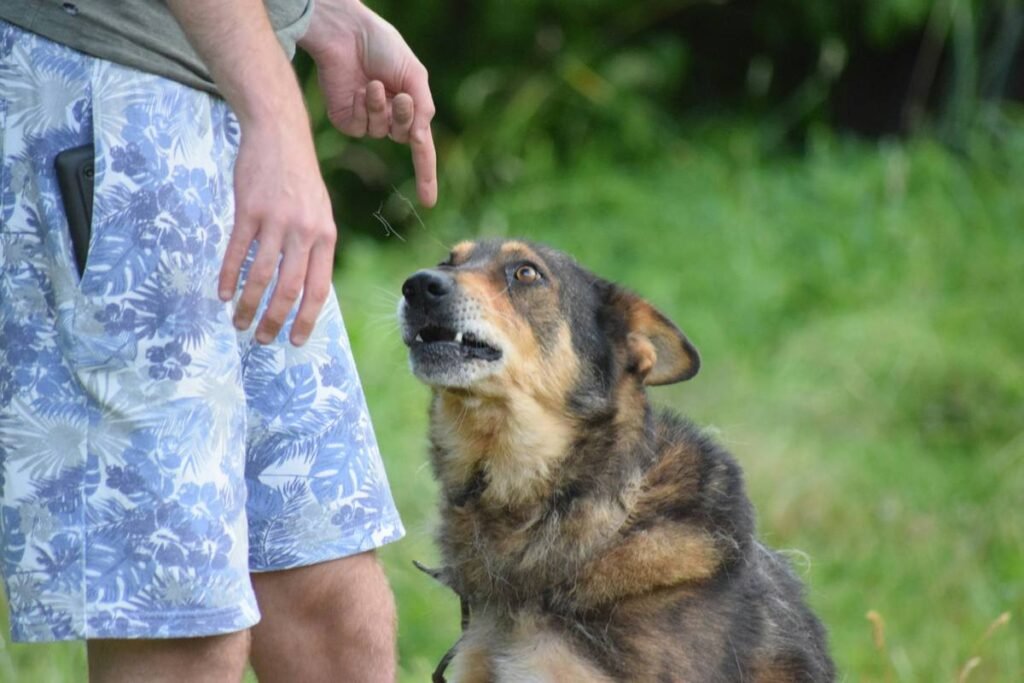
If your dog can’t hear you, how do you get them to come when called, sit on cue, or even just look at you? This isn’t just about hand signals—it’s about building a whole new language rooted in trust, clarity, and consistency. Teaching visual commands to a deaf dog is one of the most rewarding yet misunderstood parts of pet care. Unfortunately, many well-meaning owners fall into traps that delay progress or, worse, confuse their pup. In this guide, we’ll walk through exactly what works—backed by experience, expert insights, and real-world success—with actionable steps so you never waste another training session.
Table of Contents
- Why Visual Commands Are Non-Negotiable for Deaf Dogs
- Your Step-by-Step Visual Training Blueprint
- 5 Must-Follow Best Practices (That Most Owners Ignore)
- Real Results: From Panic to Partnership
- Frequently Asked Questions
Key Takeaways
- Deaf dogs rely entirely on sight—consistent visual cues are essential for safety and bonding.
- Start with attention-getting methods before teaching obedience commands.
- Use positive reinforcement exclusively; punishment creates fear in deaf dogs.
- Consistency across all family members prevents confusion.
- Many “quick fixes” online actually hinder long-term learning.
Why Visual Commands Are Non-Negotiable for Deaf Dogs
About 5–10% of dogs in the U.S. have some degree of hearing loss, according to the American Kennel Club. For fully deaf dogs, auditory cues vanish completely—meaning traditional verbal commands like “come” or “stay” simply don’t exist in their world. Without a reliable visual command system, these dogs face higher risks of anxiety, accidents, and behavioral issues.

I learned this the hard way. Years ago, I adopted Max, a bright-eyed white Bull Terrier later confirmed deaf. During our first off-leash walk at the park, I called his name… and he kept chasing a squirrel straight toward traffic. Heart in my throat, I realized: if I couldn’t reach him visually, I couldn’t keep him safe. That moment changed everything. It wasn’t enough to wave my arms—I needed a structured, repeatable system.
Your Step-by-Step Visual Training Blueprint
Step 1: Capture Attention First
Before any command, your dog must look at you. Use gentle taps on the floor, a flickering flashlight (never strobe), or waving your hand in their peripheral vision. Reward immediately when they make eye contact. According to the ASPCA’s guide on deaf dog care, consistent attention cues form the foundation of all future communication.
Step 2: Choose Clear, Distinct Hand Signals
Avoid subtle gestures. A flat palm down for “sit,” open hand sweeping upward for “up,” and a sweeping arm cross for “stay” are widely recommended by trainers. Ensure signals differ enough to prevent confusion—like not using two similar downward motions for different commands.
Step 3: Pair Signals with Positive Reinforcement
Every correct response earns a treat, toy, or enthusiastic praise (even if they can’t hear it—your facial expression matters!). Never scold. Deaf dogs are highly sensitive to body tension; frustration reads as threat.
Step 4: Practice in Low-Distraction Zones
Begin indoors, then move to quiet yards before tackling parks. Gradually increase difficulty only when your dog responds consistently 9 out of 10 times.
Step 5: Involve the Whole Household
Everyone must use identical signals. One person using a finger point for “come” while another uses an open palm creates chaos. Create a quick-reference chart on your fridge!
5 Must-Follow Best Practices (That Most Owners Ignore)
- Never startle your dog from sleep. Gently touch their shoulder or tap the floor nearby first. Sudden awakenings can trigger defensive bites.
- Use a vibrating collar ONLY for recall—not correction. These collars gently buzz to get attention, not punish. (We detail ethical use in our About Us philosophy.)
- Record your sessions. Video helps spot inconsistencies in your signals you’d miss in real time.
- Avoid “airplane hands.” Waving both arms randomly looks like panic—not a cue. Keep movements intentional and minimal.
- Teach “check-in” behavior. Condition your dog to glance at you every 10–15 seconds during walks. This builds proactive communication.
Real Results: From Panic to Partnership
Take Luna, a rescued deaf Border Collie featured in a 2023 study by the University of California, Davis School of Veterinary Medicine. Initially reactive and fearful, her owner implemented the visual command help how to teach protocol outlined above. Within 8 weeks, Luna responded reliably to 12 distinct hand signals and could safely navigate busy dog parks. Her owner reported a 70% drop in anxiety behaviors, measured via standardized canine behavioral assessments.
This isn’t rare. With consistent visual command help how to teach strategies, over 90% of deaf dogs achieve basic obedience comparable to hearing peers—per data from the Deaf Dog Education Fund, cited by Cornell University’s College of Veterinary Medicine (source).
Frequently Asked Questions
Can older deaf dogs learn visual commands?
Absolutely. Age doesn’t limit learning—consistency does. Start with one command, use high-value treats, and keep sessions under 5 minutes.
How do I call my deaf dog back outside?
Use a unique signal (e.g., double wave) paired with a vibrating collar set to attention-only mode. Always reward generously upon return.
Is sign language necessary for deaf dogs?
No. Custom hand signals work fine, but avoid ASL unless your whole household learns it—consistency beats complexity.
What’s the biggest mistake people make?
Repeating signals rapidly when the dog doesn’t respond. This teaches them to ignore the first (and second, and third) cue. Wait, reset, then try once.
Does visual command help how to teach work for partially hearing dogs?
Yes—and it’s often ideal. Many “hearing” dogs lose high-frequency hearing with age. Visual cues future-proof your communication.
Where can I get personalized guidance?
We offer tailored support based on your dog’s temperament and your lifestyle. Reach out anytime through our Contact Us page. Your privacy is protected per our Privacy Policy.
Training a deaf dog isn’t about compensation—it’s about connection. Every clear gesture, every rewarded glance, every safe return from the yard builds a bond words can’t match. So ditch the guilt, skip the gimmicks, and start where trust begins: eye to eye. As we say at Snuffy’s: Silence speaks volumes—when you know the signs.