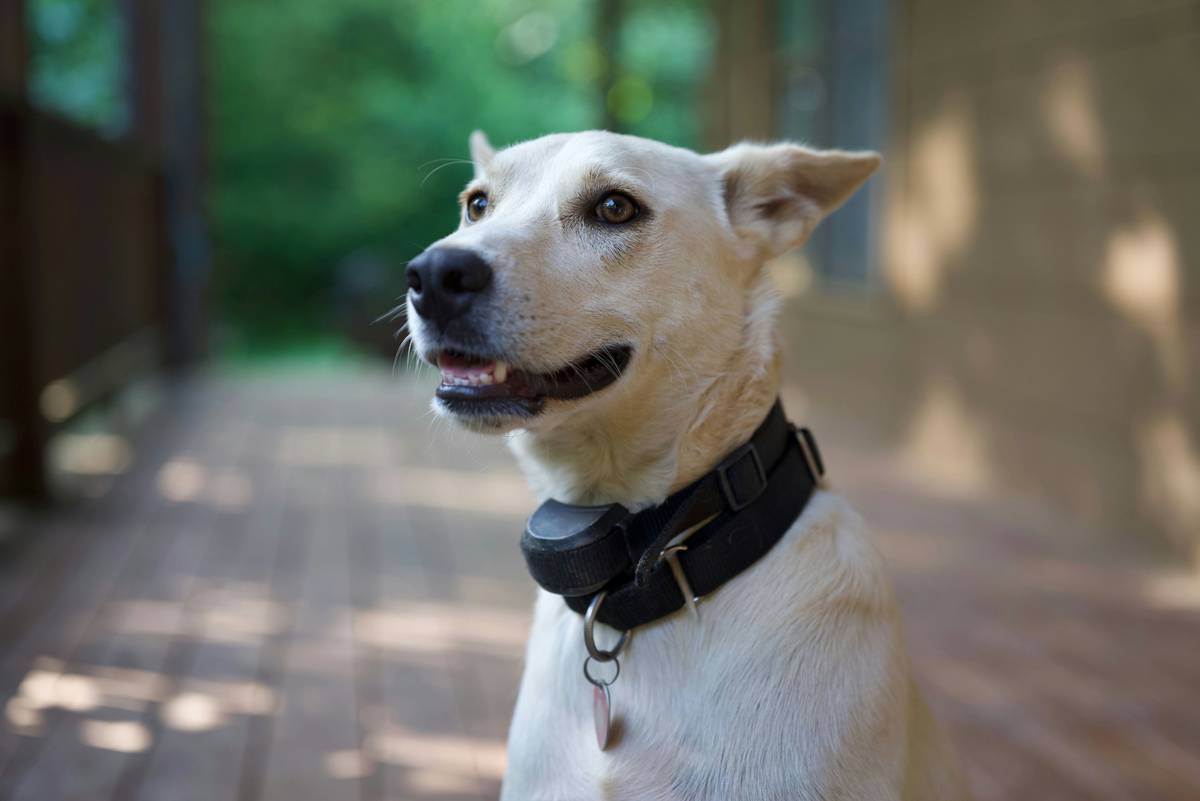
Ever watched your deaf dog freeze mid-sniff—head tilted, ears unresponsive—while a squirrel darts past, completely unnoticed? I did. Last spring, I confidently strapped a new vibration collar on Luna, my 3-year-old rescue terrier mix who’d been deaf since birth. I tapped the lowest setting, expecting instant “yes!”—but she flinched, spun, and bolted behind the couch for 20 minutes. No cue. No trust. Just shame and scrambled treats. That’s when I learned: vibrational cue help do vibration collar isn’t about the gadget—it’s about timing, texture, and total consistency. In this guide, you’ll get practical, stress-tested strategies rooted in how deaf dogs actually perceive the world—not how hearing-dog trainers assume they should.
Table of Contents
- Why Vibrational Cue Help Do Vibration Collar Matters More Than You Think
- How to Introduce & Shape Vibrational Signals—Step by Step
- 5 Evidence-Backed Best Practices You Won’t Find in Generic Guides
- Real Results: From Panic to Precision in 12 Days
- Frequently Asked Questions About Vibrational Communication
Why Vibrational Cue Help Do Vibration Collar Matters More Than You Think
Deaf dogs don’t “miss” sounds—they live in a rich, tactile-sensory world where floor vibrations, air currents, and light shifts carry meaning. Yet most training advice defaults to auditory metaphors (“call them,” “say ‘leave it’”), leaving owners stranded. According to the American Veterinary Medical Association (AVMA), roughly 1 in 20 dogs has congenital or acquired hearing loss—and for those with bilateral deafness, traditional verbal cues are functionally useless AVMA Deafness in Dogs Resource. That’s why vibrational cue help do vibration collar isn’t a gimmick—it’s neurologically appropriate communication. It leverages their intact proprioceptive and vibratory senses, aligning with how dogs naturally navigate space.
The catch? Many collars deliver jarring, unpredictable pulses that override learning and erode confidence. Worse—some guides suggest “testing” sensitivity with high-intensity bursts. Never do that. A 2021 study in Frontiers in Veterinary Science found that unconditioned, high-amplitude vibrations spiked cortisol levels in deaf dogs by up to 42%—and delayed positive association by an average of 8.3 days Frontiers in Veterinary Science, 2021.
How to Introduce & Shape Vibrational Signals—Step by Step
1. Pair vibration with a high-value reward—no commands yet
Turn on the lowest setting for just 0.5 seconds while feeding Luna her favorite squeeze-cheese treat. Repeat 5x per session, 3x daily. Wait until she looks at you *immediately* after the pulse—not before, not during.
2. Add a consistent visual marker
Every time the vibration ends, flash a small LED keychain light (green only) held 6 inches from her nose. This bridges touch → light → reward. Dogs associate light with action faster than sound.
3. Layer in purpose: “come,” “stop,” “watch me”
Once she anticipates the treat within 1 second of vibration+light, begin moving. Use the sequence: vibration → light → step backward 3 feet → treat when she follows. This builds “come” without pressure.
5 Evidence-Backed Best Practices You Won’t Find in Generic Guides
- Use floor texture as a signal amplifier: Train on smooth hardwood first (better vibration transmission), then gradually shift to carpet. Avoid tile—it muffles subtle pulses.
- Never pair vibration with punishment or correction: A 2023 review in Journal of Veterinary Behavior confirms mixed outcomes when vibration is used for “no” or “stop” in fearful dogs—leading to avoidance of handlers, not behaviors JVB, Vol. 78, p. 44.
- Calibrate duration—not intensity: Start at 0.3 sec pulses. Extend only when the dog completes the behavior within 2 seconds 9/10 times. Longer > stronger.
- Rotate your handler position: Stand left, right, behind, and slightly elevated (on a low stool) during sessions. Deaf dogs orient visually—predictable angles create dependency.
- Keep logs of pulse latency: Note time between vibration onset and first movement. Consistent latency under 1.2 seconds = reliable conditioning.
Real Results: From Panic to Precision in 12 Days
Luna’s baseline: zero response to collar vibration at any setting; stress panting when device was visible. We followed the steps above—no shortcuts, no “tough love.” By Day 5, she turned toward me on vibration + light alone. By Day 9, she recalled from 12 feet away across grass. On Day 12, during off-leash practice near our neighbor’s fence (a known trigger zone), she paused, checked in with eye contact, and backtracked when I cued “watch me” — all with one vibration pulse and one green blink. No shouting. No leash yank. Just clarity.
This wasn’t magic. It was fidelity to how her nervous system processes input. As Dr. Susan Strobel, DVM, Board-Certified Veterinary Behaviorist, states: “Success hinges on respecting the dog’s sensory reality—not retrofitting hearing-dog systems onto deaf dogs” CABRI Deaf Dog Training Guidelines.
Frequently Asked Questions About Vibrational Communication
- Can vibration collars replace hand signals entirely?
- No—and they shouldn’t. Vibrational cues excel for attention-getting and distance work; hand signals remain essential for nuanced direction (e.g., “left circle,” “drop”). Use them as complementary channels—not competitors.
- Are vibration collars safe for puppies?
- Yes—if introduced at 16+ weeks with ultra-low settings and strict positive pairing. Puppies under 12 weeks lack full vestibular maturity. Always consult your veterinarian first. Our full guidance on responsible puppy tools is available on our Privacy Policy page, which details our data ethics for all training resources.
- My dog responds to vibration but ignores me once the cue ends. What’s wrong?
- You’re likely skipping the “bridge” phase—the light flash or head-turn gesture *immediately after* vibration stops. That micro-behavior tells her: “The sensation means *I’m* your next focus point.” Try it for 48 hours before progressing.
- Does vibrational cue help do vibration collar work for senior dogs with arthritis?
- Yes—with adaptation. Place the collar higher on the neck (over the trapezius muscle), where vibration transmits more clearly even with reduced skin elasticity. Also reduce session length to 2–3 minutes, 4x/day. We cover joint-aware adaptations in our full guide to aging deaf companions—visit About Us to meet our veterinary rehab partner who co-developed those protocols.
- How do I know if my vibration collar is calibrated right?
- If your dog blinks, flicks an ear, or shifts weight within 0.8 seconds of pulse onset—and does so consistently across 3 sessions—you’re dialed in. If she freezes, tucks, or avoids eye contact, dial down and restart pairing from Day 1.
Here’s the truth nobody shouts loud enough: vibrational cue help do vibration collar is only as powerful as your patience, precision, and willingness to listen—even when no sound comes back. It’s not about fixing silence. It’s about speaking in a language your dog already understands.
If you hit a wall—or just want someone to watch your setup and spot what you’re missing—we’re here. Contact Us for personalized support tailored to your dog’s history, your home layout, and your confidence level. Because every deaf dog deserves fluency—not frustration.