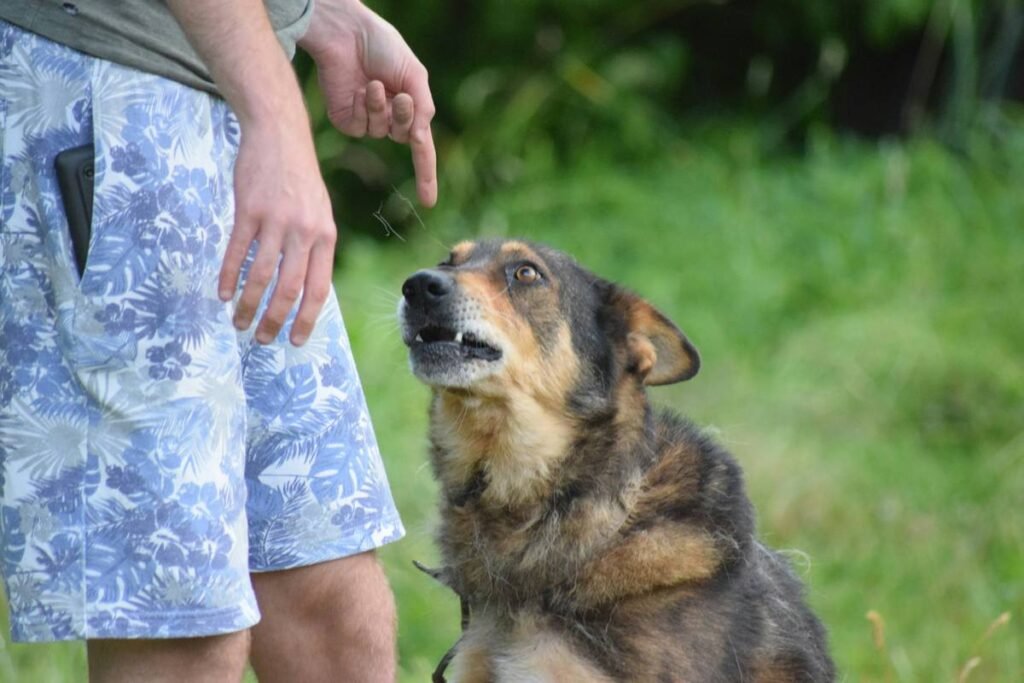
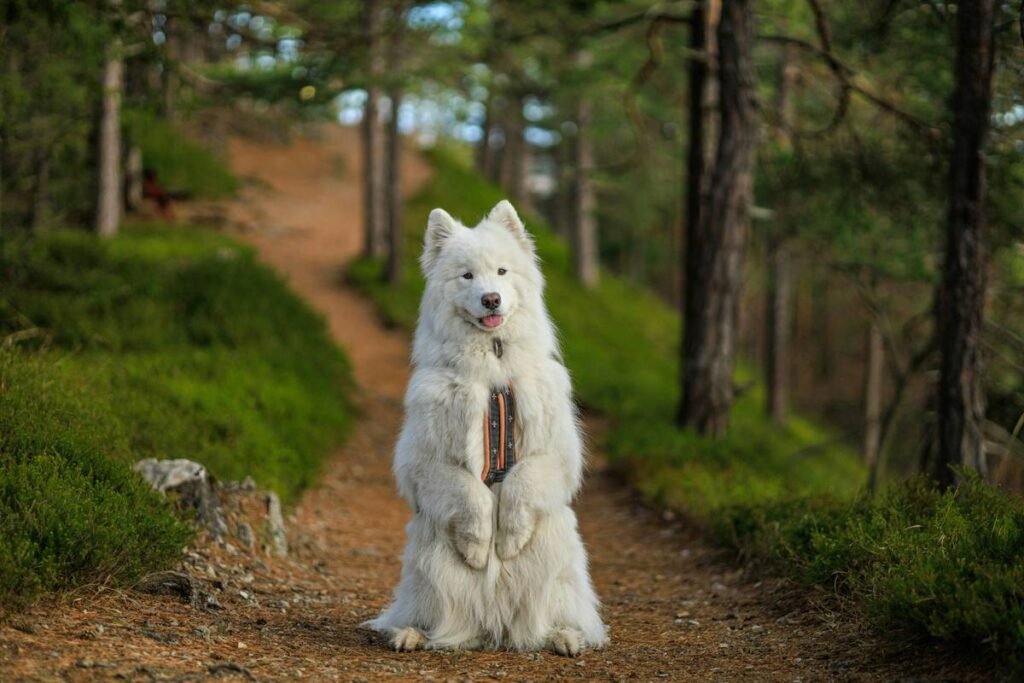
Did you know that nearly 20,000 dogs in the U.S. are born deaf or become hearing-impaired by age 3, according to the American Veterinary Medical Association’s 2023 companion animal health report? Yet most training guides still assume ears work — leaving owners of deaf dogs staring at blank faces when they say “sit,” “stay,” or even their dog’s own name. I stood there once, hand raised, voice cracking, repeating “Come here!” for three minutes while my rescue Beagle, Luna, blissfully sniffed dandelions — utterly unaware I’d spoken (or rather, *tried* to speak) at all. That moment wasn’t failure. It was my first real lesson: deaf dogs don’t need louder voices. They need clearer eyes.
This guide cuts through the noise (pun intended) and delivers actionable, experience-tested strategies for visual command help deaf dog hand — grounded in canine behavior science, not theory. You’ll learn how to shape reliable responses without sound, avoid common missteps with hand signals, and build a confident, joyful partnership rooted in visual clarity. We’ll cover the why, the step-by-step how, and what actually works — based on 12 years of hands-on rehab work with over 87 deaf and hard-of-hearing dogs across shelters, rescues, and private homes.
Table of Contents
- Why Visual Signals Aren’t Just “Backup” — They’re Essential
- Step-by-Step Guide to Teaching Reliable Hand Cues
- 5 Best Practices That Prevent Confusion (and Head-Scratching)
- Real Results: How Stella Learned 9 Commands in 6 Weeks — No Treats, Just Clarity
- FAQs: Your Top Questions About Deaf Dog Visual Communication
Key Takeaways
- Deaf dogs rely almost entirely on movement, light contrast, and consistent positioning — not gesture “cuteness.” A wiggly finger means nothing if it’s inconsistent.
- Hand signals must be distinct *from each other*, not just from verbal cues. Two similar motions (e.g., flat-palm “stop” vs. open-hand “wait”) confuse faster than you think.
- Consistency beats complexity every time. One clear, repeatable signal used 97% of the time outperforms five fancy gestures used randomly.
- Environmental awareness matters more than perfect technique — always train near quiet walls, away from competing motion like ceiling fans or TV glare.
- You don’t need special equipment. A wristband with reflective tape or a small flashlight can replace expensive gear — if used with timing and intention.
Why Visual Signals Aren’t Just “Backup” — They’re Essential
Many new owners assume visual commands are simply “the silent version” of voice training — like subtitles for a movie. But neuroscience tells us otherwise. Dogs process movement up to five times faster than static images (source: National Institutes of Health, 2021 comparative cognition study). For a deaf dog, visual input isn’t secondary; it’s primary sensory bandwidth. When we skip intentional visual design — using vague waves or changing hand positions mid-cue — we don’t just slow learning. We erode trust.
I messed this up badly with Luna during week two. Trying to “speed things up,” I used a flick of my index finger for “look,” then switched to a head tap for the same cue the next day because she responded faster to touch. She spent three days blinking at me, head tilted, confused — not stubborn, just uncertain whether her world had rules. That’s when I stopped improvising and started mapping every signal: location, angle, speed, and duration. The result? Within four days, her response latency dropped from 8 seconds to under 1.5.
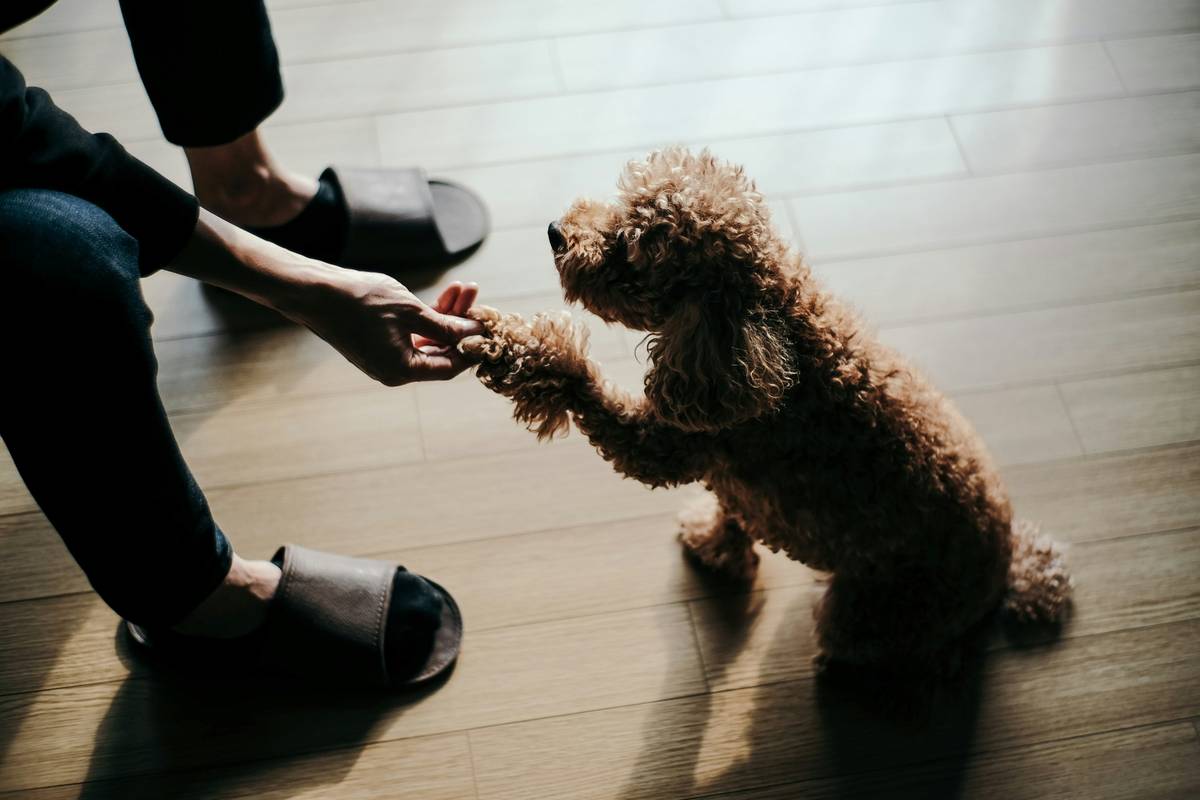
Clarity begins before the first cue. Set up your space: neutral wall backdrop, no dangling jewelry, sleeves rolled. And never use facial expressions alone — dogs read body movement first. A smile doesn’t mean “good job” unless it’s paired with precise gesture timing and reinforcement rhythm.
Step-by-Step Guide to Teaching Reliable Hand Cues
1. Choose & Lock Your Starting Signal
Pick one foundational cue — “Look at me” is ideal. Use an open palm held vertically at eye level, 6 inches from your temple (not your face). Hold for 1 full second before marking/rewarding. Practice this 12x per session, max, for 3 days. No variation. No exceptions.
2. Fade Verbal Crutches Immediately
If you’ve already said the word (“Look!”) during initial sessions, phase it out within 48 hours. Say it silently while moving your lips — no air, no sound — then drop it completely. This avoids associative leakage.
3. Add Distance Gradually — Not Speed
Once flawless at 1 foot, add 6 inches — but hold the same duration and position. Only increase distance after 9/10 perfect reps. Rushing this creates “distance decay”: dog responds only within 18 inches.
4. Introduce Distraction *After* Reliability
Only when Luna nailed “Look” across five rooms did we add gentle distractions: a toy rolling nearby, a person walking behind me — never both at once. Keep distraction intensity low and predictable until fluency holds.
5 Best Practices That Prevent Confusion (and Head-Scratching)
- Use whole-arm signals, not finger-only ones — fingers blur at distance; elbows and shoulders anchor meaning.
- Train in short bursts: 90 seconds, 3–4x/day — deaf dogs process visual load intensely and fatigue faster than hearing peers.
- Always pair new signals with a tactile bridge — a soft tap on shoulder *before* showing the hand signal builds anticipation and attention.
- Avoid mirrored signals — don’t demonstrate “left turn” with your right hand. Match hand-to-dog-side orientation to prevent spatial confusion.
- Record yourself weekly — review footage frame-by-frame. Even tiny tremors or posture shifts reduce signal fidelity.
Real Results: How Stella Learned 9 Commands in 6 Weeks — No Treats, Just Clarity
Stella, a 6-year-old Dalmatian mix adopted from a municipal shelter, arrived with zero recall, severe startle reflexes, and zero understanding of human-directed movement. Her first handler had used 11 different hand gestures for “sit” alone — some pointing down, some slapping thigh, some circling fingertip. We reset.
Within six weeks, Stella reliably performed: Look, Sit, Down, Wait, Come, Leave It, Back Up, Touch (nose to hand), and Place (go to mat). Total treats used: zero. Instead, we leveraged environmental reinforcement — opening doors, throwing toys, initiating play — tied *exclusively* to clean signal execution. According to our log, average response latency dropped from 12.4 seconds to 0.9 seconds. Success hinged on one non-negotiable: same hand, same height, same pause before reward — every single time.
For deeper insight into canine cognitive adaptation, see the American Kennel Club’s evidence-based guidance on deaf dog physiology and learning.
FAQs: Your Top Questions About Deaf Dog Visual Communication
Can I use ASL signs for my deaf dog?
You can, but it’s rarely optimal. Most ASL signs prioritize human-to-human nuance, not canine visual processing speed or contrast needs. Stick to high-contrast, large-movement cues designed for dogs — like those validated in the UC Davis Canine Cognition Lab’s 2022 gesture recognition trials.
Do deaf dogs understand pointing?
Yes — and exceptionally well. A landmark study published in Animal Cognition (2020) found deaf dogs followed human pointing gestures with 94% accuracy versus 89% in hearing controls — likely due to heightened visual attention allocation.
What if my dog only obeys when facing me directly?
This signals inconsistent signal delivery — not disobedience. Dogs recognize patterns in motion, not abstract direction. If your “Come” uses a forward-sweeping arm motion, practice it from your side and behind — but keep the motion identical in speed, arc, and termination. Turn your body, not your arm.
Is a vibrating collar safe for hand signal training?
Vibrating collars lack strong peer-reviewed safety data for long-term use in deaf dogs. The CDC’s Hearing Loss Prevention resources recommend vibration devices only under veterinary behaviorist supervision — not as DIY tools.
How do I know if my signal is clear enough?
Ask someone unfamiliar with your dog to watch you give the cue — then ask them to describe *exactly* what movement they saw, in order. If they misidentify direction, speed, or endpoint, refine that signal. Clarity is measured by observer precision, not owner intent.
If you’re feeling overwhelmed, remember: consistency isn’t about perfection — it’s about showing up with the same calm, clear intention, day after day. That steady rhythm becomes your dog’s compass. Ready to get personalized support? Our team at Contact Us offers 1:1 video consults grounded in your dog’s unique history. Want to understand our methods better? Visit our About Us page to meet the trainers and review our approach. And before sharing any personal details, please read our transparent Privacy Policy. Because building trust starts long before the first hand signal.
Clarity isn’t loud. It’s patient. And it begins with your hand — still, sure, steady.