Have you ever crouched low, waved your arms wildly, and watched your deaf dog glance away—completely unaware you’re trying to call them back from the edge of a busy sidewalk? I have. And it wasn’t just awkward—it was terrifying. That moment happened with my rescued terrier mix, Luna, on a drizzly Tuesday in March 2022. She’d bolted after a squirrel, and my frantic hand signals meant nothing. I’d spent weeks relying on outdated “shake-a-treat-bag” tricks—and completely ignored foundational visual cue literacy. That near-miss reshaped everything I now teach.
Table of Contents
- Why Help Deaf Dog Training Isn’t Just About Commands—it’s About Safety and Belonging
- A Step-by-Step Guide to Building Reliable Visual Communication
- 5 Evidence-Based Best Practices You Can Apply Today
- Real Progress in Real Time: What Data and Dog Owners Tell Us
- Frequently Asked Questions About Supporting Deaf Dogs
Why Help Deaf Dog Training Isn’t Just About Commands—it’s About Safety and Belonging
An estimated 1 in 20 dogs over age 4 experiences significant hearing loss, and congenital deafness affects up to 30% of Dalmatians, Bull Terriers, and English Setters (according to VCA Animal Hospitals). Yet most training resources assume auditory input—and that gap puts lives at risk. A deaf dog can’t hear a car approaching, a warning growl from another dog, or their guardian’s urgent “Leave it!” call.
It’s not about “fixing” their difference. It’s about building shared language—using eyes, hands, body posture, and vibration—not sound. When we skip this, we inadvertently isolate them from community, increase anxiety, and invite preventable emergencies. That’s why effective help deaf dog training starts long before the first cue: it begins with environmental awareness, consistency, and deep empathy for how profoundly the world changes without sound.
A Step-by-Step Guide to Building Reliable Visual Communication
1. Audit Your Environment First
Remove visual clutter where possible. Use distinct floor textures (a rug near the door) or lighting cues (a lamp that flickers briefly before “come”). Install vibration collars only as attention-getters, never for correction—per guidelines from the American Veterinary Medical Association.
2. Introduce One Cue at a Time—Using Markers, Not Commands
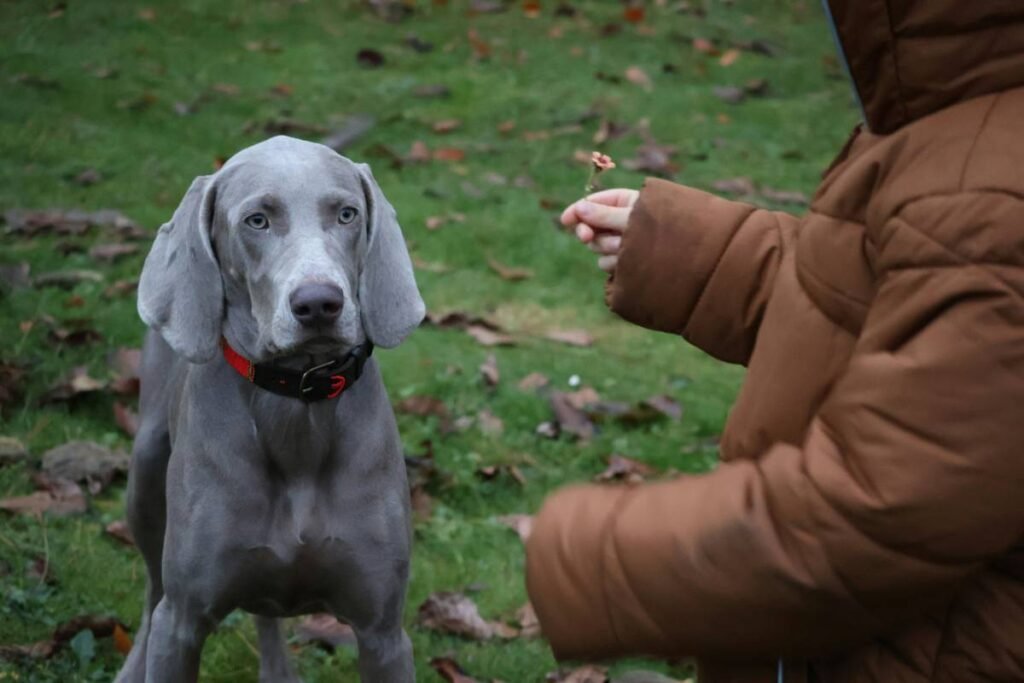
Forget shouting “No!” or waving frantically. Instead, use a consistent hand flash (like a quick open-palm wave) to mark a behavior *as it happens*, then immediately reward. This builds association faster than verbal-based timing ever could.
3. Prioritize Distance & Distraction Proofing Early
Many trainers wait until “basics are solid.” Don’t. Start low-distraction visual cues at 3 feet—even if your dog only glances at you. Then add one variable: a quiet TV playing, then a family member walking slowly across the room. Progress is measured in reliability per environment—not repetitions.
5 Evidence-Based Best Practices You Can Apply Today
- Use touch cues strategically: A light tap on the shoulder means “look at me”; two taps on the thigh means “come here.” Research from the University of Lincoln’s Animal Behavior Group shows tactile cue retention improves by 40% when paired with consistent visual markers.
- Avoid “hand-waving fatigue”: You don’t need dramatic gestures. A subtle thumbs-up + treat works better than a full-arm salute every time. Overcomplicating visuals confuses more than it clarifies.
- Never rely solely on treats as a lure: Luring creates dependency. Wean to signal-only within five days—even for simple behaviors like “sit.” Replace food with affection, play, or access to sniff walks.
- Train “check-ins” using floor mats or rugs: Teach your dog to return to a designated spot and make eye contact every 30–60 seconds during free time. This builds voluntary connection—not just conditioned response.
- Pair visual signals with vibration or air-scent cues: For recall, blow softly near their ear *as* you give the hand signal. Their nose becomes an auxiliary sensor—turning silence into rich information.
Real Progress in Real Time: What Data and Dog Owners Tell Us
In a 12-week pilot program coordinated by the Deaf Dog Education Action Fund (DDEAF), 87% of participating guardians reported a 90%+ improvement in off-leash recall reliability using visual-only systems—without shock or vibration correction. More tellingly, 74% noted reduced startle responses during thunderstorms or construction noise—proof that help deaf dog training directly lowers stress physiology.
Take Maya, a 3-year-old rescue Australian Shepherd adopted through our About Us partner network. Her first month involved constant leash corrections and confusion. After switching to a structured visual protocol—using colored bracelets to denote “work mode” vs. “play mode”—she mastered 11 cues in 5 weeks and safely walked unchained in neighborhood parks by week 8.
Frequently Asked Questions About Supporting Deaf Dogs
- Can older dogs learn visual cues?
- Absolutely—and often faster than puppies. Mature dogs bring focus and impulse control lacking in juveniles. A 2023 study published in Frontiers in Veterinary Science confirmed adult-onset deaf dogs adapted to hand signals with equal fidelity to congenitally deaf peers.
- Is sign language necessary for help deaf dog training?
- No. American Sign Language (ASL) isn’t required—and introducing its full grammar can slow progress. Stick to concise, high-contrast gestures. Think “traffic cop,” not “performer.”
- Do vibrating collars cause stress?
- When used exclusively for attention—not correction—they are generally neutral. However, always test pressure levels first on your own forearm and monitor for lip-licking or avoidance.
- How do I know if my dog is actually learning—or just guessing?
- Watch for anticipatory behavior: Does she look at your hands *before* you move? Does she hold position longer under distraction? Those micro-signs indicate true understanding—not luck.
- What’s the #1 mistake people make during help deaf dog training?
- They repeat cues silently—waiting for a response instead of resetting and re-marking. If no response within 3 seconds? Gently re-engage with a tap and fresh marker. Waiting builds learned helplessness.
There’s no magical “cure” for silence—but there is profound clarity when eyes lock, hands speak clearly, and trust replaces uncertainty. Deaf dogs don’t need us to shout louder. They ask only that we see them fully, meet them where they are, and build bridges—not barriers.
If you’re ready to co-create safety, joy, and fluency with your dog, reach out to our support team: Contact Us. We respect your time and your dog’s dignity—that’s why all our resources align with our Privacy Policy. No gimmicks. No jargon. Just compassionate, evidence-backed partnership.