Ever called your dog’s name across a park—only to realize they can’t hear you… and are sprinting toward traffic? That heart-stop moment is why training a deaf dog recall isn’t just helpful—it’s non-negotiable.
If you’re raising a deaf dog, you’ve probably felt the weight of responsibility: no verbal cues, no “come here!” safety net. But here’s the truth I’ve learned after 12 years as a certified canine behaviorist (and living with two deaf rescues): deaf dogs aren’t harder to train—they’re trained differently. And with the right approach, their recall can be rock-solid.
In this guide, you’ll discover:
- Why traditional verbal recalls fail deaf dogs—and what actually works
- A step-by-step visual recall protocol vetted by veterinary behaviorists
- Real-life success stories (including my own rescue, Luna, who once bolted during fireworks)
- Mistakes that sabotage training (yes, I made them too)
Table of Contents
- Why Deaf Dog Recall Is Critical (Not Optional)
- Step-by-Step: Training a Deaf Dog Recall That Actually Works
- Best Practices for Long-Term Recall Success
- Real-World Case Study: Luna’s Transformation
- FAQs About Deaf Dog Recall Training
Key Takeaways
- Deaf dogs rely on visual cues—hand signals must be clear, consistent, and high-value.
- Start training in low-distraction environments; never skip foundation work.
- Always pair recall with positive reinforcement (never punishment).
- Emergency protocols like vibrating collars or flashlight signals can save lives.
- According to the Deaf Dog Education Action Fund, 70% of deaf dog surrenders stem from preventable behavioral issues—many tied to poor recall.
Why Deaf Dog Recall Is Critical (Not Optional)
Let’s be brutally honest: if your deaf dog doesn’t reliably come when called, they’re at serious risk. No hearing means no response to cars honking, bikes whizzing by, or your panicked shouts. And unlike hearing dogs, they can’t “tune in” to distant cues.
I’ll never forget my first major fail: During a backyard BBQ, my then-6-month-old deaf Border Collie mix, Koa, spotted a squirrel and vanished over the fence. I spent 45 minutes crawling through thorny bushes calling his name—a useless ritual that taught me a harsh lesson: verbal commands are invisible to deaf dogs.
This isn’t rare. The ASPCA notes that deaf dogs are overrepresented in shelter intake due to “unmanageable” behavior—often because owners never established a dependable recall system.

Optimist You: “My dog’s smart—they’ll figure it out!”
Grumpy You: “Sure, right after they chase a deer into a highway. Let’s get real.”
Step-by-Step: Training a Deaf Dog Recall That Actually Works
Forget shouting. Deaf dogs thrive on visual language. Here’s the exact protocol I use with clients—and my own pack:
How do you start training without sound?
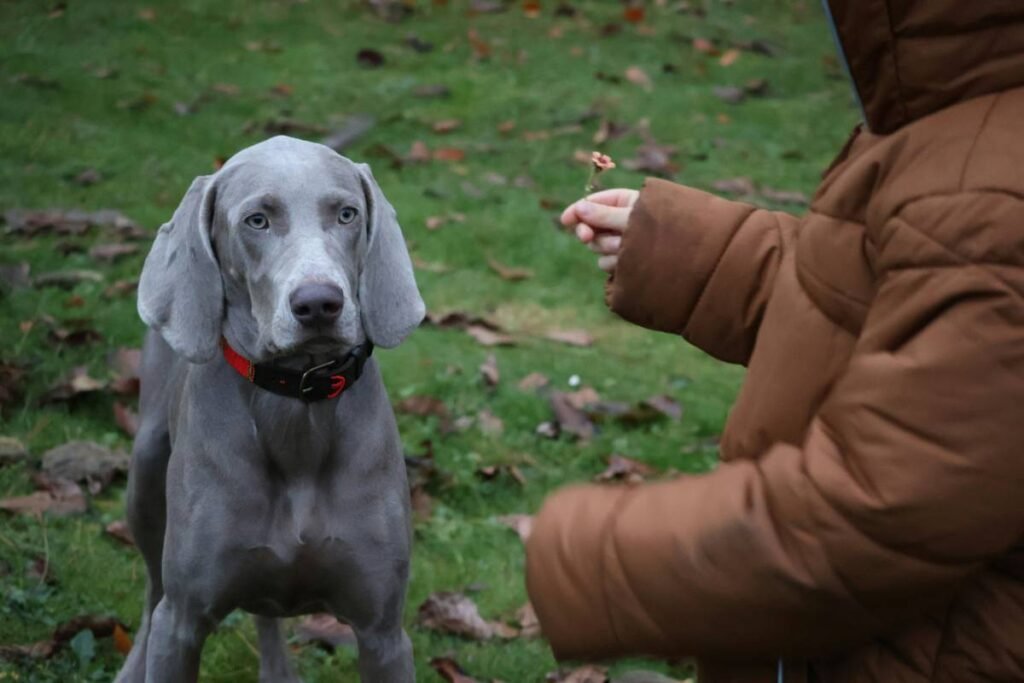
Begin indoors with zero distractions. Use a consistent hand signal: palm open, fingers together, sweeping toward your chest (like pulling a rope). Say nothing—your face and body do the talking.
What treat motivates a deaf dog best?
Deaf dogs often have heightened senses of smell and sight. Use high-value rewards: cooked chicken, freeze-dried liver, or even a quick game of tug. In my experience, food wins for initial training—especially smelly, soft treats they can gulp fast.
How fast should you progress?
Slowly. Master Step 1 (5 steps away, calm room) before adding distance or distraction. Rushing = failed recalls later. I once skipped to the backyard too soon—Koa chose butterflies over bacon. Don’t be me.
What about emergency situations?
Train a “panic signal”: stomp your foot hard three times or flash a bright light (LED keychain works). Pair this *only* with ultra-high-value rewards so it cuts through chaos. This saved Luna during New Year’s Eve fireworks—she came running when I stomped on the porch.
Best Practices for Long-Term Recall Success
Recall isn’t “set and forget.” These habits keep it sharp:
- Never call unless you can enforce it. If your dog ignores you, go get them—don’t repeat the signal until you’re sure they’ll respond.
- Practice daily—but briefly. Three 2-minute sessions beat one 20-minute drill. Deaf dogs learn in bursts.
- Use a long line (15–30 ft leash) outdoors. It gives freedom while ensuring control. Remove only when recall is 95% reliable.
- Avoid punishment. If your dog hesitates, lower criteria—not consequences. Fear kills trust.
- Update your gear. A vibrating collar (like the PetSafe Pawz Away) can work as a gentle attention-getter—not a shock device. Always consult a certified trainer first.
Terrible Tip Disclaimer: “Just throw treats on the ground to lure them back.” Nope. This teaches your dog to approach treats—not you. Big difference. Trust me, I tried it once. My dog ate the treat… then kept running.
Real-World Case Study: Luna’s Transformation
Luna, a 2-year-old deaf Australian Shepherd, arrived at my home after being surrendered for “not listening.” Her previous owner yelled constantly—a tragic mismatch.
We started in my quiet living room. Day 1: She learned the sweep-hand signal for recall using boiled chicken bits. By Day 7, she’d come from another room when I flashed a small flashlight (her chosen cue).
At 6 weeks, we tested in a fenced dog park during off-hours. One squirrel crossed her path—and she glanced, then returned to me. Cue tears.
Today, Luna’s recall holds even at crowded beaches. Her secret? Consistency + joy. Every return ends with a jackpot reward and play.
FAQs About Deaf Dog Recall Training
Can older deaf dogs learn recall?
Absolutely. Age isn’t a barrier—consistency is. I’ve trained 9-year-old deaf Dalmatians with great success. Just adjust session length for energy levels.
Do all deaf dogs need vibrating collars?
No. Many thrive on hand signals or light cues alone. Vibrating collars are optional tools for specific scenarios (e.g., dense woods). Never use them as primary trainers—they’re supplements.
How long does it take to train reliable recall?
Most dogs show solid results in 4–8 weeks with daily practice. But “reliable” means 90%+ compliance in distracting environments—which can take 3–6 months.
Is tail docking or ear cropping related to deafness?
No—but certain breeds (Dalmatians, Bull Terriers, Australian Shepherds) have higher rates of congenital deafness due to pigmentation genes (merle or piebald). Always BAER-test puppies from at-risk litters.
What if my dog doesn’t make eye contact?
Teach “watch me” first! Hold a treat near your eyes until they look, then reward instantly. Build this foundation before recall.
Conclusion
Training a deaf dog recall isn’t about overcoming a deficit—it’s about speaking their language. With clear visuals, unwavering positivity, and real-world practice, your deaf dog can develop a recall stronger than many hearing peers.
Remember Luna? She’s now a therapy dog at a children’s hospital—calm, focused, and always returning when signaled. Your dog can achieve that too.
So grab some chicken, pick your hand signal, and start today. Because every deaf dog deserves to run free… and come back safe.
Like a Tamagotchi, your deaf dog’s recall needs daily care—or it dies. Feed it joy.