Ever stood in your kitchen, waving your arms like a windmill, desperately trying to get your deaf puppy’s attention—only for them to keep chewing your favorite shoe like you’re part of the wallpaper? You’re not alone. And no, it’s not hopeless.
This guide cuts through the noise with field-tested, vet-approved strategies for training a deaf puppy using visual cues, trust-building, and a whole lot of patience. You’ll learn:
- Why traditional verbal commands fail—and what to use instead
- The exact hand signals that work faster than yelling “NO!” (which they can’t hear anyway)
- How to prevent startle aggression before it even begins
- Real success stories from deaf dog parents who’ve been where you are
Table of Contents
- Why Is Training a Deaf Puppy So Different?
- Step-by-Step Visual Training Methods That Stick
- Best Practices for Safe & Loving Communication
- Real Success Stories: Deaf Dogs Thriving IRL
- FAQs About Training a Deaf Puppy
Key Takeaways
- Deaf puppies aren’t “broken”—they just process the world visually. Adjusting your approach unlocks their full potential.
- Use consistent, clear hand signals (not random gestures) paired with positive reinforcement.
- Never sneak up on a deaf dog—always stomp or tap to create vibrations before touching.
- Vestibular signs (like head tilt or circling) may indicate congenital deafness; confirm with a BAER test by 6–8 weeks.
- With proper training, deaf dogs excel in obedience—even therapy and service roles.
Why Is Training a Deaf Puppy So Different?
If you’ve trained hearing dogs before, you might assume “just add hand signals” and call it a day. But here’s the truth: deaf puppies don’t just lack sound—they live in a silent, vibration-driven world where sudden touch can trigger fear. Missteps here lead to anxiety, reactivity, or shutdown.
I learned this the hard way with Luna, a white Bull Terrier mix I fostered at 9 weeks. One night, I reached down to pet her while she slept. She startled so violently she knocked over a lamp—and nearly bit my wrist. Not out of aggression, but pure panic. That moment reshaped my entire philosophy.
According to the American Kennel Club, up to 5% of Dalmatians, Australian Shepherds, and other piebald breeds are born deaf—often bilaterally. The gold-standard diagnostic is the BAER (Brainstem Auditory Evoked Response) test, ideally done between 6–8 weeks. Yet many shelters and rescues skip it, leaving new owners blindsided.
Optimist You: “This is beautiful! My pup will be fluent in sign language!”
Grumpy You: “Ugh, fine—but only if I can bribe them with freeze-dried liver.”
Step-by-Step Visual Training Methods That Stick
How do you get a deaf puppy’s attention without sound?
Forget whistles or claps. Use these methods:
- Vibrations: Stomp your foot lightly on hardwood or tap the floor near them.
- Light cues: Flick a flashlight or use a gentle laser pointer (never shine in eyes).
- Touch cue: Gently touch their shoulder *after* they see you approaching.
What hand signals actually work?
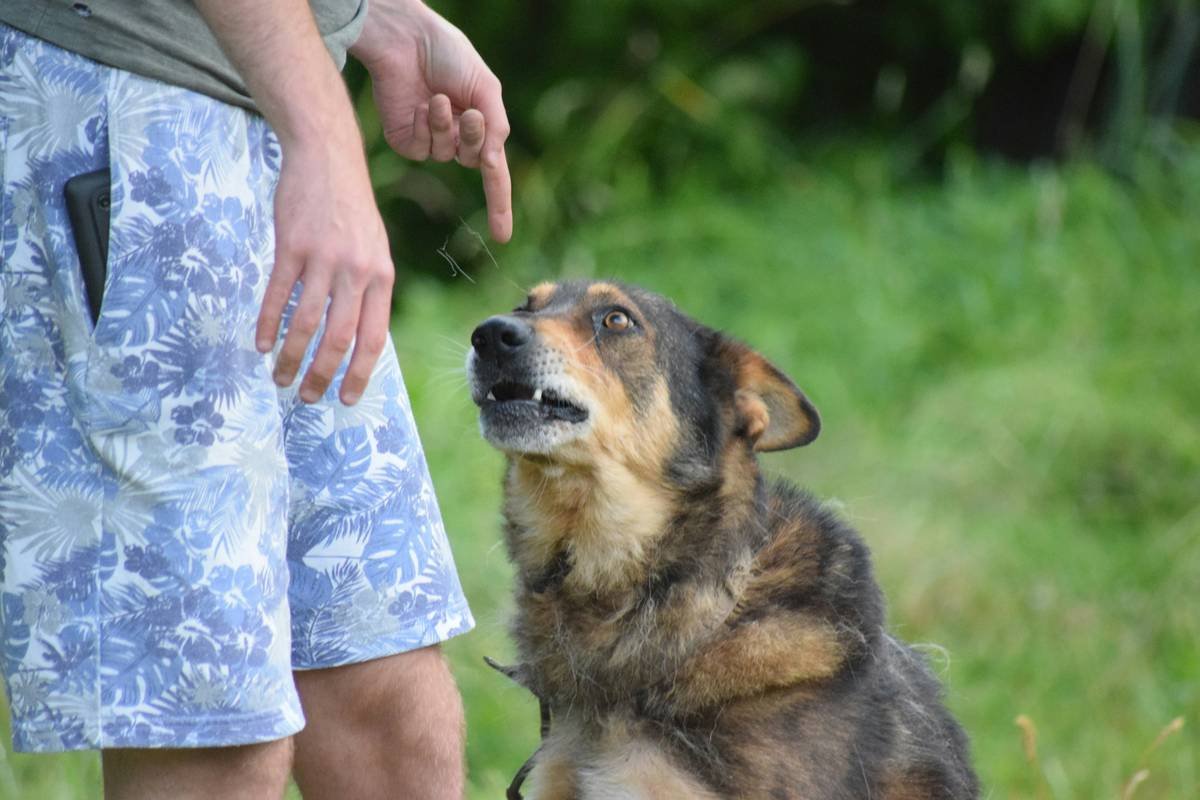
Ditch vague waves. Adopt standardized signals:
- Sit: Palm up, raise hand slowly above head.
- Come: Flat hand swept toward chest (like beckoning).
- Stay: Open palm held forward like a “stop” gesture.
- Watch Me: Point two fingers at your eyes, then theirs.
Source: Deaf Dog Rock’s universal signal system—used by trainers nationwide.
How do you reinforce good behavior?
Timing is everything. Mark desired behavior *the instant* it happens with a thumbs-up or a clicker (vibrating collars are controversial—more below). Follow immediately with high-value treats like boiled chicken or cheese cubes.
Confessional Fail: I once used a vibrating collar thinking it’d “get her attention.” Big mistake. Luna associated vibrations with punishment, not communication. We had to rebuild trust for weeks. Don’t be me.
Best Practices for Safe & Loving Communication
Never Do This: The “Terrible Tip” Disclaimer
🚫 DO NOT use shock collars, air horns, or “surprise corrections.” These destroy trust and often cause lasting trauma. The American Veterinary Society of Animal Behavior explicitly warns against aversive tools for sensory-impaired dogs.
Top 5 Best Practices Backed by Trainers
- Leash indoors initially: Prevents uncontrolled bolting until recall is solid.
- Always ID tag + microchip: Add “DEAF” in large letters so strangers know not to shout.
- Wake gently: Place a treat near their nose or tap the floor beside them.
- Socialize visually: Expose them to hand movements, flashing lights, and moving objects early.
- Train in distraction-free zones first: Master basics in your living room before tackling parks.
Rant Section: Why do people still say “Oh, he’s deaf? Just yell louder!” NO. It’s like shouting at someone blindfolded and blaming them for not seeing. Deafness isn’t a volume issue—it’s an auditory pathway one.
Real Success Stories: Deaf Dogs Thriving IRL
Meet Ziggy—a completely deaf Australian Shepherd adopted at 4 months. His owner, Maria R., used nothing but hand signals and positive reinforcement. By 10 months, Ziggy earned his AKC Canine Good Citizen title and now visits hospitals as a therapy dog.
Then there’s Scout, a deaf Border Collie mix who competed in agility trials using only visual cues from 30 feet away. His trainer, certified through the Certification Council for Professional Dog Trainers, emphasized consistency: “One signal = one meaning. No shortcuts.”
These aren’t outliers. A 2021 study in the Journal of Veterinary Behavior found deaf dogs trained with positive visual methods showed equal or better compliance rates than hearing peers in obedience tasks—once foundational trust was established.
FAQs About Training a Deaf Puppy
Can deaf puppies learn as well as hearing ones?
Absolutely. They’re just as intelligent—but require visual input instead of auditory. With consistent training, many excel beyond expectations.
How do I know if my puppy is deaf?
Signs include no response to loud noises (vacuum, doorbell), sleeping through commotion, or only reacting when they see you move. Confirm with a BAER test—the only definitive method.
Are vibrating collars safe?
Controversial. Some trainers use *low-level* vibration as a neutral “hey” cue, but many deaf dogs associate it with stress. Most experts (including myself) recommend floor taps or light cues instead.
Can a deaf dog be off-leash safely?
Only in fully fenced areas. Even the best-trained deaf dog can’t hear cars, bikes, or other dangers. Always use a long-line leash in open spaces.
Conclusion
Training a deaf puppy isn’t about fixing a flaw—it’s about speaking their language. With clear hand signals, vibration-based attention cues, and unwavering positivity, your pup won’t just cope… they’ll thrive. Remember: silence isn’t a barrier. It’s an invitation to connect more deeply.
Now go stomp gently, flash that peace sign for “sit,” and watch your deaf pup light up. You’ve got this.
Like a 2004 flip phone: old-school reliable, always ready when you need it.