Ever called your dog’s name… and watched them happily ignore you while sprinting toward a squirrel-infested abyss? Now imagine that every single time—because your dog can’t hear you at all. If you’re nodding with a lump in your throat or frantically googling “dog training for deaf dogs” at 2 a.m., you’re not alone.
This guide is for the quiet heroes raising deaf dogs: people who’ve swapped “sit” for signs, traded whistles for flashlights, and learned that connection doesn’t require sound—it requires clarity, consistency, and heart. You’ll learn how to train a deaf dog using science-backed visual cues, avoid common (and heartbreaking) mistakes I’ve seen—even made myself—and discover why your deaf pup might be the most attentive dog you’ll ever meet.
Table of Contents
- Why Is Dog Training for Deaf Dogs Different?
- Step-by-Step Visual Training Methods
- Best Practices for Safe, Calm Everyday Life
- Real Success Story: Luna the Rescue Who Learned to Glow
- FAQs About Dog Training for Deaf Dogs
Key Takeaways
- Deaf dogs rely on vision and vibration—not sound—for communication.
- Hand signals must be consistent, distinct, and introduced early.
- Always wake a deaf dog gently to prevent startle aggression.
- Vibrating collars (not shock collars!) are safe, humane tools when used correctly.
- Deaf dogs are NOT more dangerous—they’re often more focused and observant.
Why Is Dog Training for Deaf Dogs Different?
Conventional dog training leans heavily on verbal cues (“Come!” “No!” “Leave it!”). For a deaf dog, those words vanish into silence. But here’s what many new owners don’t realize: deaf dogs aren’t broken—they’re just wired differently.
I remember my first mistake with Koa, a white bull terrier rescue diagnosed as bilaterally deaf at 4 months. I kept yelling “Off!” when he jumped—like somehow volume would breach his auditory void. Spoiler: it didn’t. He just looked confused… then jumped again. It felt like shouting into a canyon with zero echo. Frustrating? Yes. But fixable? Absolutely.
According to the American Veterinary Society of Animal Behavior (AVSAB), deaf dogs can learn faster than hearing dogs in visual environments because they’re hyper-attuned to body language. They watch your eyes, your shoulders, your breathing. In fact, a 2022 study published in Applied Animal Behaviour Science found that deaf dogs showed higher rates of sustained eye contact during training sessions—a goldmine for building trust.
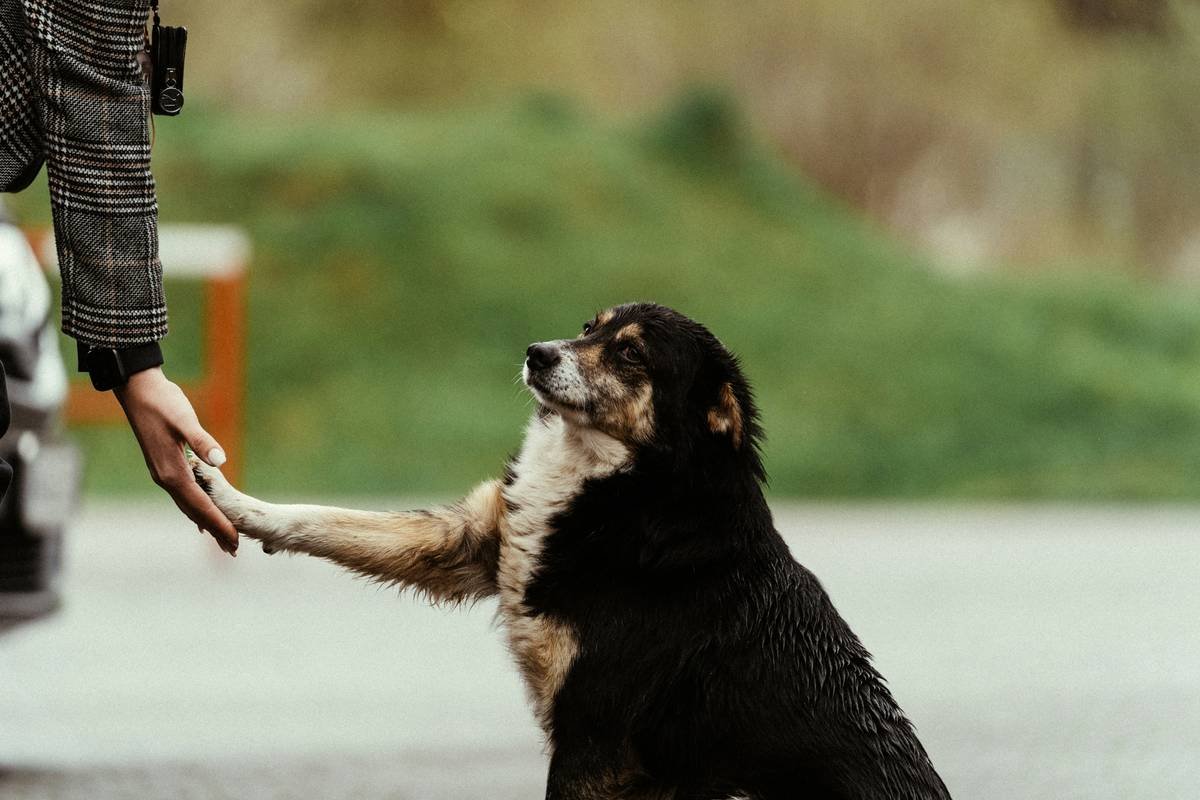
The real challenge isn’t capability—it’s human assumption. We assume silence equals limitation. But flip that script: deafness unlocks a world of visual precision most trainers never explore.
Step-by-Step Visual Training Methods
How do I teach basic commands without sound?
Optimist You: *“Just replace words with hand signals—easy!”*
Grumpy You: *“Ugh, fine—but only if coffee’s involved… and you promise not to make me invent 20 different gestures.”*
Here’s the deal: use one unique hand signal per command. No mixing “sit” with your “stay” motion. Clarity prevents confusion. Start with these:
- Sit: Palm flat, move downward slowly from chest level.
- Come: Sweep arm inward toward your chest (like hugging yourself).
- Stay: Open palm, facing dog—like a traffic cop saying “stop.”
- Good/Yes: Thumbs-up or quick upward flick of the index finger (paired with a treat!).
Use high-value treats (think: freeze-dried chicken, not kibble) and reward within 1–2 seconds of correct behavior. Why? Because timing is everything—especially when you can’t say “Yes!” to mark the moment.
What about recall outdoors?
This is where panic sets in. “What if my deaf dog bolts into traffic?” Fair fear. Solution: a vibrating collar (NOT a shock collar!). Brands like PetTec or DogRook offer gentle vibration-only remote collars. Train it like this:
- At home, press the button → immediately show your “come” signal + treat.
- Repeat until dog associates vibration with “look at me NOW.”
- Practice in fenced yards before open spaces.
Vibration is a tap on the shoulder—not punishment. The ASPCA endorses this method for emergency recall in deaf dogs (ASPCA Pro guidelines, 2023).
Best Practices for Safe, Calm Everyday Life
How do I wake my deaf dog without scaring them?
Terrifying truth: A startled deaf dog may snap instinctively. Never grab or shout. Instead:
- Gently tap the floor near them to create vibration.
- Place your hand in front of their nose so they smell you as they wake.
- Sleep with a nightlight—so they see you approaching.
Terrible Tip Disclaimer ⚠️
“Just use a flashlight to get their attention!” — NO. Random light flashes mimic seizures, cause anxiety, and confuse dogs. Use consistent, purposeful signals—not strobes.
Rant Time: Why “Poor Thing” Hurts More Than Helps
I’ve lost count of how many strangers cooed, “Aww, poor baby!” when they saw Koa’s deafness tag. Newsflash: my dog isn’t tragic—he’s brilliant. Deaf dogs don’t need pity; they need patience and proper training. Stop treating them like fragile glass. They’re dogs—just quieter ones.
Real Success Story: Luna the Rescue Who Learned to Glow
Luna, a deaf Australian Shepherd mix, was surrendered at 6 months after failing “basic obedience.” Her foster thought she was “stubborn.” Truth? She’d never been taught visually.
We started with 5-minute daily sessions using lure-and-reward with a target stick (a wand with a ball tip). Within 3 weeks, Luna mastered sit, down, stay, and recall using hand signals. At 1 year, she passed her CGC (Canine Good Citizen) test with flying colors—scoring higher in focus than most hearing dogs.
Today, Luna alerts her owner to alarms by pawing—a skill we shaped using positive reinforcement. Her secret? Consistency. No mixed signals. No frustration. Just clear, kind communication.
FAQs About Dog Training for Deaf Dogs
Are deaf dogs more aggressive?
No. Aggression stems from fear or poor socialization—not deafness. With gentle handling and predictable routines, deaf dogs are often calmer because they’re undistracted by noise pollution (e.g., car horns, thunder).
Can I use American Sign Language (ASL)?
You can—but keep it simple. Most trainers adapt ASL or create custom signals. What matters is consistency, not linguistic accuracy.
How do I know if my dog is deaf?
Signs include no response to loud noises (while sleeping), startling easily, and excessive barking (some deaf dogs bark more because they can’t hear themselves). Confirm with a BAER test—available at most veterinary neurology centers.
Is it safe to let a deaf dog off-leash?
Only in fully enclosed areas. Even with perfect recall, deaf dogs can’t hear cars, bikes, or other dangers. Prioritize safety over freedom.
Conclusion
Dog training for deaf dogs isn’t about overcoming a disability—it’s about embracing a different language. With visual cues, vibration tools, and deep respect for your dog’s perspective, you’ll build a bond louder than any whistle. Remember: silence isn’t empty. It’s full of watching eyes, wagging tails, and unwavering trust.
Now go teach your deaf dog “good”—then watch them glow.
Like a Tamagotchi, your deaf dog’s confidence needs daily care: charge it with patience, feed it with consistency, and never let it fade to black.