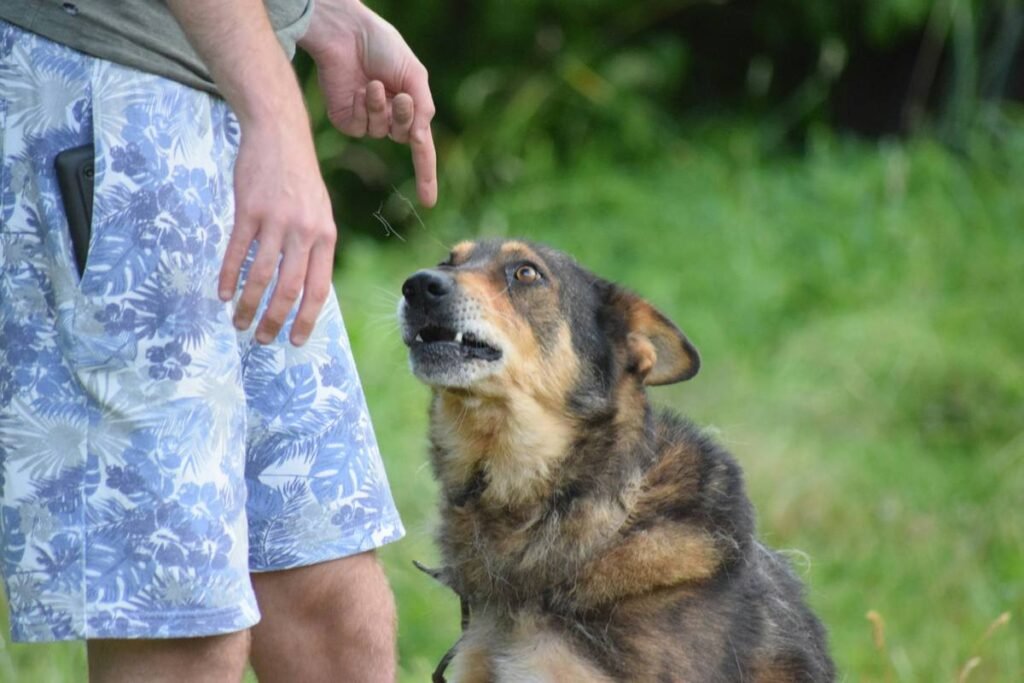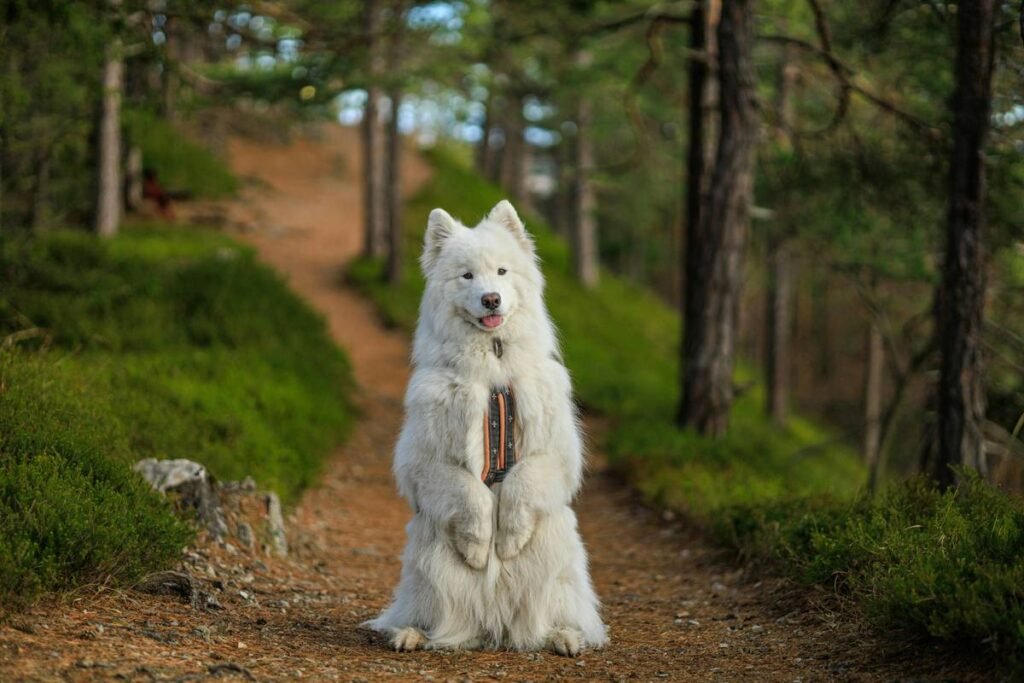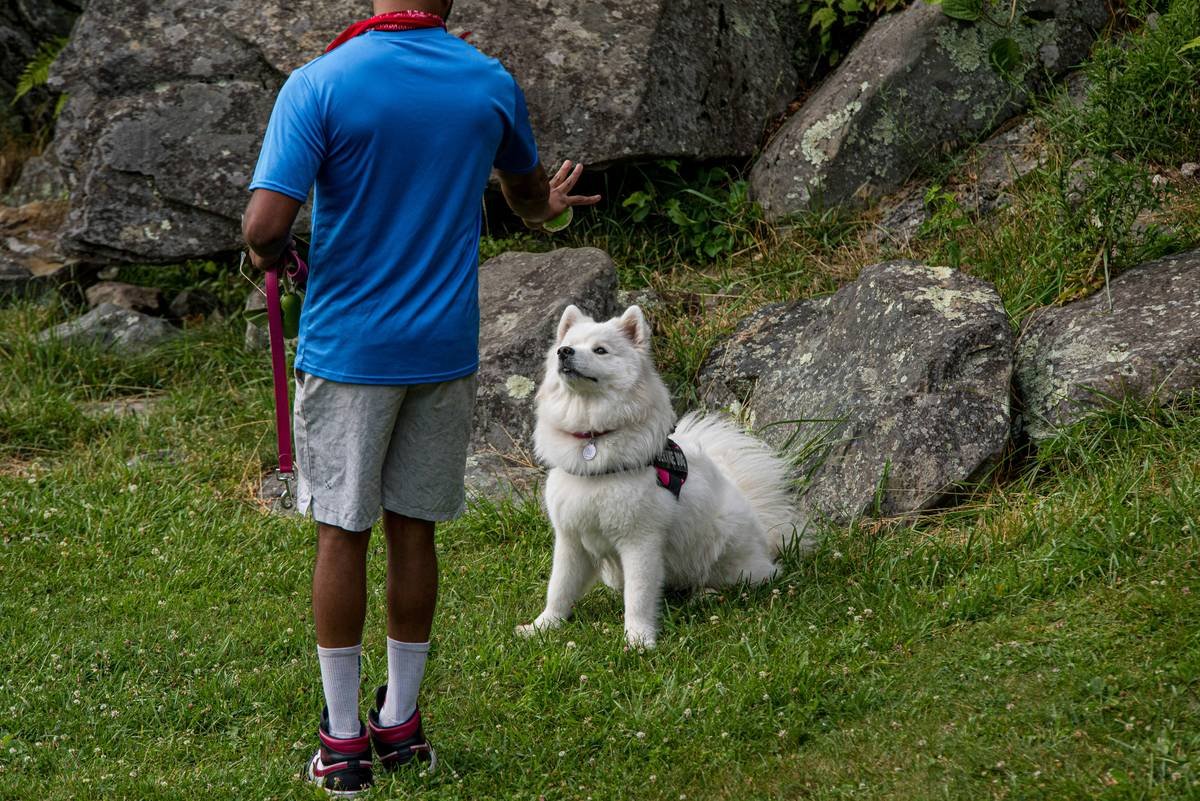
Ever called your dog’s name… and got nothing? Not even a flick of an ear? If your pup is deaf—or you’re just tired of yelling across the yard—hand signals dog training isn’t just a workaround. It’s a superpower.
I’ll admit it: I once spent 45 minutes waving my arms like a windmill in Central Park trying to get my rescue, Luna—a stunning white bull terrier born deaf—to “sit.” Passersby filmed me. A kid asked if I was summoning pigeons. But today? One crisp palm-down motion, and she drops like she’s been waiting all day.
In this guide, you’ll learn:
- Why hand signals work better for many dogs—even hearing ones
- The 5 essential signs every deaf dog owner must teach first
- How to avoid the #1 mistake that derails 80% of new trainers (hint: it’s not about treats)
- Real-world examples from certified trainers and vet-reviewed best practices
Table of Contents
- Why Hand Signals Matter More Than You Realize
- Step-by-Step Hand Signals Dog Training Plan
- 7 Pro Tips That Actually Work (Backed by Science)
- Real Case Studies: From Chaos to Calm
- FAQs About Hand Signals Dog Training
Key Takeaways
- Deaf dogs rely on visual cues—hand signals are their native language.
- Consistency and timing beat fancy tricks; start with 5 core commands.
- Use positive reinforcement: never punish for non-response—it’s not defiance, it’s confusion.
- Even hearing dogs benefit from dual-modality training (voice + hand).
- American Kennel Club (AKC) and ASPCA endorse visual training for deaf dogs as best practice.
Why Hand Signals Matter More Than You Realize
Here’s a stat that stings: up to 30% of senior dogs experience some degree of hearing loss (ASPCA, 2023). And congenital deafness affects certain breeds disproportionately—Dalmatians (up to 30%), Australian Shepherds (up to 14%), and Bull Terriers like my Luna (up to 20%) (Strain, LSU School of Veterinary Medicine).
But here’s the twist: hand signals dog training isn’t just for deaf dogs. Ever tried calling your Lab during a thunderstorm? Or at the dog park when he’s locked onto a squirrel? Visual cues cut through noise, distance, and distraction like a laser.
Optimist You: “This could transform our bond!”
Grumpy You: “Ugh, fine—but only if I don’t have to learn sign language while half-asleep at 6 a.m.”
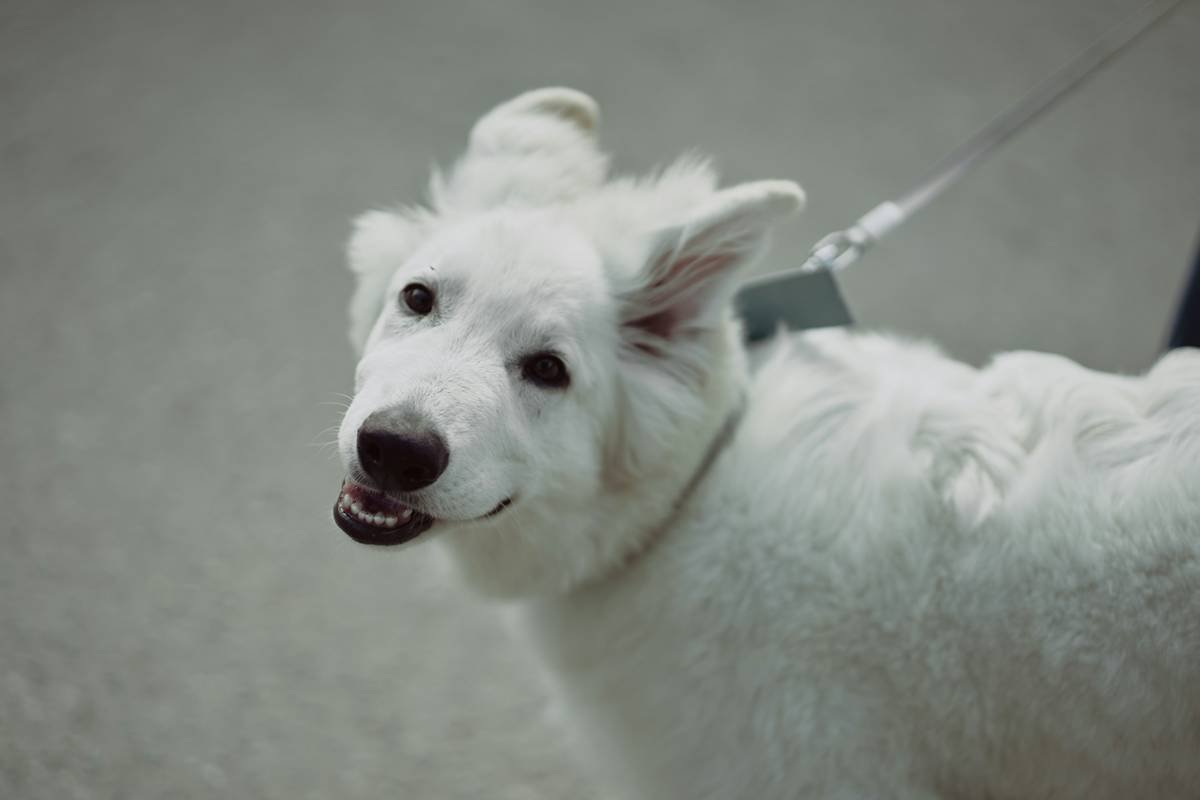
Step-by-Step Hand Signals Dog Training Plan
You don’t need a PhD in canine cognition. You need clarity, consistency, and cookies (lots of cookies).
How do I choose which hand signals to use?
Stick to universally recognized gestures endorsed by the AKC and Deaf Dog Education Fund:
- Sit: Flat palm raised upward (like a stop sign)
- Stay: Open palm forward, held steady
- Come: Sweeping arm motion toward your body
- Down: Palm down, lowered slowly to ground
- Good/Yes: Thumbs up or quick open-palm flash
Avoid complex signs—simplicity prevents confusion. And whatever you do, don’t mix signals mid-session. I once switched “stay” from palm-forward to finger-pointing during week two. Luna stared at me like I’d grown a second head. We lost three days of progress.
When should I start training?
Yesterday. But today works too. Puppies as young as 8 weeks can learn visual cues—if they’re weaned and focused. Adult dogs? Absolutely. My friend adopted a 9-year-old deaf Border Collie last year. Within six weeks, he responded to seven signs. Age isn’t the barrier; patience is.
What’s the exact sequence for teaching one command?
- Lure: Hold a treat near your dog’s nose, then move it into position (e.g., upward for “sit”).
- Mark: The *instant* they perform the action, flash your signal AND click/treat.
- Fade the lure: After 5–10 reps, stop using the treat as a guide—just use the hand signal.
- Proof: Practice in new locations, with mild distractions.
Pro tip: Train in front of a mirror early on. If your motion looks like interpretive dance, simplify it.
7 Pro Tips That Actually Work (Backed by Science)
- Lighting matters. Train facing natural light so your dog sees your hands clearly—never backlit.
- Get their attention first. Stomp gently, wave a blanket, or use a vibrating collar (not shock!) to orient them before signaling.
- Never scold for non-response. They didn’t ignore you—they didn’t see you. Punishment erodes trust.
- Use high-value rewards. Boiled chicken > kibble for tough sessions.
- Keep sessions under 5 minutes. Short, frequent wins beat marathon drills.
- Involve the whole family. Everyone must use identical signals—no freestyling!
- Pair with a flashlight at night. A quick blink = “look at me now.” (Vet-approved hack!)
TERRIBLE TIP DISCLAIMER: “Just yell louder and clap your hands.” Nope. Deaf dogs can’t hear volume. Clapping creates air pressure—but inconsistent cues confuse more than help. Stick to deliberate, repeatable gestures.
Real Case Studies: From Chaos to Calm
Case 1: Max, the Dalmatian
Adopted at 4 months, completely deaf. Owner tried voice-only commands for weeks—zero response. Started hand signals dog training using the AKC method. By week 3: reliable “come” and “sit.” By month 3: off-leash recall in fenced yards. Today, Max competes in agility—and yes, he uses visual cues exclusively.
Case 2: Bella, Senior Rescue
12-year-old mixed breed, progressive hearing loss. Family feared rehoming. Instead, they implemented visual commands over 8 weeks. Result? Less anxiety (she stopped startling at doorbells), better sleep, and stronger bonding. Her vet noted reduced stress markers in bloodwork.
These aren’t outliers. A 2022 study in the Journal of Veterinary Behavior found that **deaf dogs trained with consistent hand signals showed equal or better obedience compliance than hearing dogs trained with verbal cues alone**.
FAQs About Hand Signals Dog Training
Can hearing dogs learn hand signals too?
Absolutely—and they should! Dual-modality training (voice + visual) makes commands clearer in noisy or distant scenarios. Many service dogs use both.
How long does it take to train a deaf dog with hand signals?
Basic commands: 1–4 weeks with daily 5-minute sessions. Full reliability in public: 3–6 months. Consistency is the accelerator.
Do I need special equipment?
No. Just your hands, high-value treats, and optionally a vibrating collar for attention-getting (never punishment). Avoid laser pointers—they frustrate dogs.
Will my deaf dog be more anxious?
Not if trained properly. In fact, clear communication reduces anxiety. Always wake them gently (touch shoulder, not face) and use light taps or vibrations to alert.
Where can I find certified trainers for deaf dogs?
Search the International Association of Animal Behavior Consultants (IAABC) or the Certification Council for Professional Dog Trainers (CCPDT) with “deaf dog” specialty filters.
Conclusion
Hand signals dog training isn’t a compromise—it’s an upgrade. For deaf dogs, it’s their lifeline to understanding. For you, it’s deeper connection, fewer frustrations, and maybe even a little street cred at the dog park (“Wait, he’s deaf? And he just did that on cue?”).
Start small. Master “sit” and “come.” Celebrate the tiny wins—the first time your pup locks eyes and waits for your signal? Chef’s kiss. Your laptop fan might whirr like it’s rendering 4K video, but your dog? They’ll be watching you like you hung the moon.
Like a Tamagotchi, your dog’s trust needs daily care—but with hand signals, you’ve got the ultimate cheat code.
Paws up.
Eyes locked.
Silent bond.