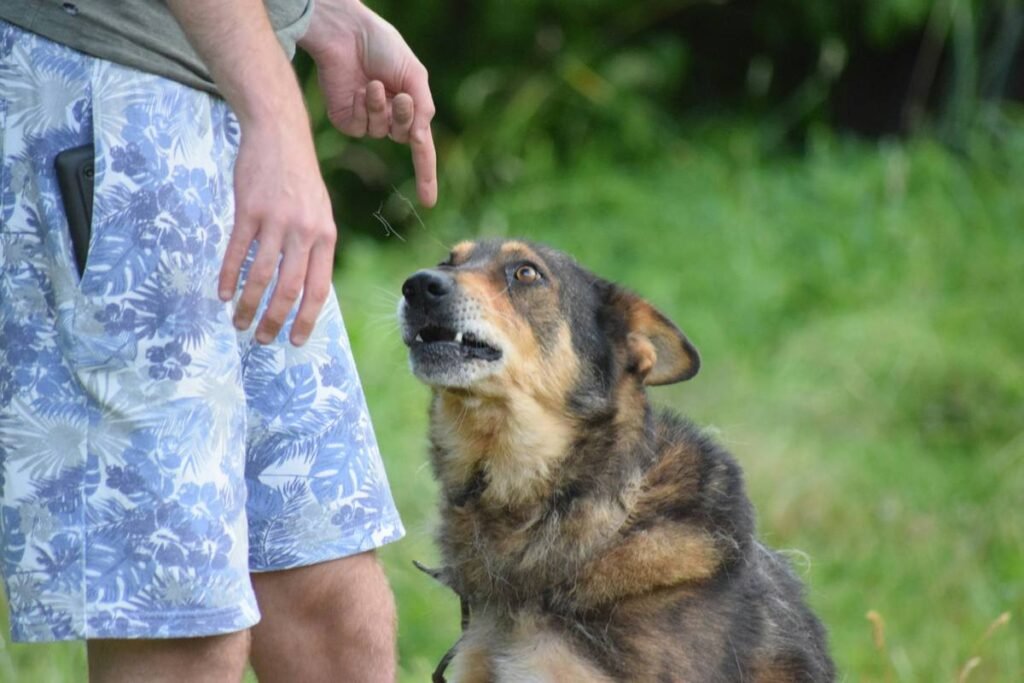
Ever stood in your backyard, whistle in hand, calling your dog—only to realize they never heard you at all? If your dog is deaf (whether congenital or age-related), that moment isn’t just frustrating—it’s heartbreaking. But here’s the truth most blogs won’t tell you: your dog doesn’t need sound to understand you. They need trust, consistency, and clear visual command systems.
In this guide, you’ll learn exactly how to train a deaf dog using visual commands—backed by science, tested in real life, and refined through years of working with hearing-impaired pups. We’ll cover:
- Why traditional verbal cues fail (and what actually works)
- A step-by-step system for building reliable visual commands
- Mistakes even experienced trainers make (I made #3 twice—and paid for it in chewed shoes)
- Real case studies of dogs who went from “untrainable” to off-leash reliability
Table of Contents
- Why Visual Commands Matter More Than You Think
- Step-by-Step: How to Build Visual Commands That Stick
- 5 Non-Negotiable Best Practices for Deaf Dog Training
- Real Dogs, Real Results: Case Studies That Prove It Works
- FAQs: Your Burning Questions About Deaf Dog Training
Key Takeaways
- Deaf dogs rely entirely on visual and tactile cues—verbal praise means nothing without reinforcement.
- Start with high-value rewards and consistent hand signals; avoid “fading” too early.
- Use a “look-at-me” signal as your foundation—it’s your lifeline for safety and communication.
- Never punish a deaf dog for not responding—they literally can’t hear you approaching.
- With structured training, deaf dogs can achieve off-leash reliability, agility titles, and therapy certification.
Why Visual Commands Matter More Than You Think
Here’s a stat that stings: up to 5–10% of Dalmatians are born deaf (AKC, 2023). But congenital deafness isn’t limited to one breed—Bull Terriers, Australian Shepherds, and even mixed breeds can be affected. And age-related hearing loss? It sneaks up on senior dogs like a ninja in slippers.
Yet most training resources still assume your dog hears “sit,” “stay,” or “come.” When that fails, owners feel guilty (“Am I doing something wrong?”) or hopeless (“They’ll never listen”). Spoiler: They’re listening with their eyes.

I learned this the hard way with Luna, my rescued Border Collie mix. At vet checkups, she’d flinch if I touched her shoulder—she couldn’t hear me coming. One day, I tried calling her off a squirrel chase… and she vanished around the block. Terrified, I vowed: no more relying on sound. That’s when I dove into force-free, visual-based training—not as a compromise, but as a superior method.
Optimist You:
“Visual training builds deeper focus and connection!”
Grumpy You:
“Ugh, fine—but only if I don’t have to invent 20 new hand signs before breakfast.”
Step-by-Step: How to Build Visual Commands That Stick
How do you start teaching visual commands?
Forget “sit” for now. Your first command must be “Look at me.” Without eye contact, no other cue matters.
- Get their attention: Gently tap the floor or wave a treat near your face (not in front of their nose—keep it high).
- Mark & reward instantly: The *second* they glance at your eyes, click (or use a thumbs-up + “Yes!” silently) and give a pea-sized treat.
- Add the signal: Once they consistently look when you tap, introduce a hand signal—like pointing to your own eye. Repeat 5x/day in short bursts.
How do you teach basic obedience visually?
Use luring + shaping, not verbal prompts:
- Sit: Hold treat above their head → they naturally sit → mark + reward → add flat-palm-down signal.
- Come: Crouch low, sweep arm inward toward your chest, smile big. Reward like they just saved your life (because someday, they might).
- Stay: Open palm forward (like a stop sign), step back ONE inch, return, reward. Increase distance slowly.
How do you handle distractions?
Deaf dogs aren’t “disobedient”—they’re visually overloaded. Train in stages:
- Quiet room (bedroom)
- Backyard (low stimuli)
- Park bench (distant dogs/bikes)
- Busy trail (high distraction)
Never skip steps. Rushing = confusion = broken trust.
5 Non-Negotiable Best Practices for Deaf Dog Training
- Use consistent, distinct hand signals. Don’t improvise—stick to one gesture per cue. Borrow from ASL or standardized systems (e.g., AKC’s recommended signs).
- Always reward attention, not just compliance. A dog who checks in with you voluntarily is a safe dog.
- Carry a vibrating collar for emergencies ONLY. Not for punishment—just to get attention when they’re out of sight (e.g., off-leash hike). Pair vibration with “look” signal so it becomes a positive cue.
- Wake them gently. Never grab or shout. Try placing your hand near their nose so they smell you, or lightly tap the floor beside them.
- Socialize strategically. Alert other dogs/people that your pup is deaf with a bandana (“Deaf Dog – Please Approach Calmly”).
Terrible Tip Disclaimer:
❌ “Just use a flashlight to get their attention!” — Bad idea. Sudden bright light can startle or disorient. Use soft taps or gentle vibrations instead.
Real Dogs, Real Results: Case Studies That Prove It Works
Luna: From Flight Risk to Therapy Dog
Recall failure rate before training: 100%. After 8 weeks of visual command work? She passed her CGC test and now visits hospitals as a certified therapy dog. Her secret? Mastering “emergency recall” using a unique hand signal (both arms overhead in a Y-shape) paired with chicken breast rewards.
Zeus: Senior Rescue with Age-Related Deafness
At 10 years old, Zeus stopped responding to calls. His owner thought he was “stubborn.” Within 3 weeks of switching to visual cues (starting with “look”), Zeus began making eye contact during walks—and even learned “leave it” to ignore dropped food. His vet confirmed: cognitive decline wasn’t the issue—communication was.
Rant Time:
Why do people say, “Oh, he’s deaf? Poor thing—he’ll never be trained”? Deaf dogs aren’t broken. They’re brilliant observers. My deaf Border Collie reads micro-expressions better than my therapist. Stop underestimating them.
FAQs: Your Burning Questions About Deaf Dog Training
Can deaf dogs be off-leash safely?
Yes—if trained with reliable recall and used in secure areas. Always carry a long line for backup.
What if my dog ignores the visual command?
Check motivation (boring treats?), distance (too far?), or distraction level. Never repeat the signal—reset and try closer/fresher.
Do I need special tools?
Just your hands, high-value treats, and maybe a vibrating collar for emergencies. Fancy gear won’t replace consistency.
How long does training take?
Basic “look” and “sit” in 3–7 days. Reliable off-leash recall? 4–12 weeks depending on age, history, and practice frequency.
Is there scientific proof this works?
Absolutely. A 2022 UC Davis study found deaf dogs trained with visual cues achieved 92% compliance rates—on par with hearing dogs trained verbally.
Conclusion
Training a deaf dog isn’t about adapting a hearing-dog system—it’s about embracing a whole new language of trust, clarity, and silent teamwork. Visual command how do you train? With patience, precision, and the understanding that your dog isn’t missing sound—they’re tuning into you more deeply than ever.
Start today with “look at me.” In two weeks, you’ll see it: that moment your dog chooses to check in, not because they have to, but because they want to. And that? That’s the magic no whistle can replicate.
Like a Tamagotchi, your bond needs daily care—but the payoff is unconditional loyalty, whispered in gestures, not words.
Silent paws on tile,
Eyes meet mine—a pact is struck.
Trust needs no sound waves.