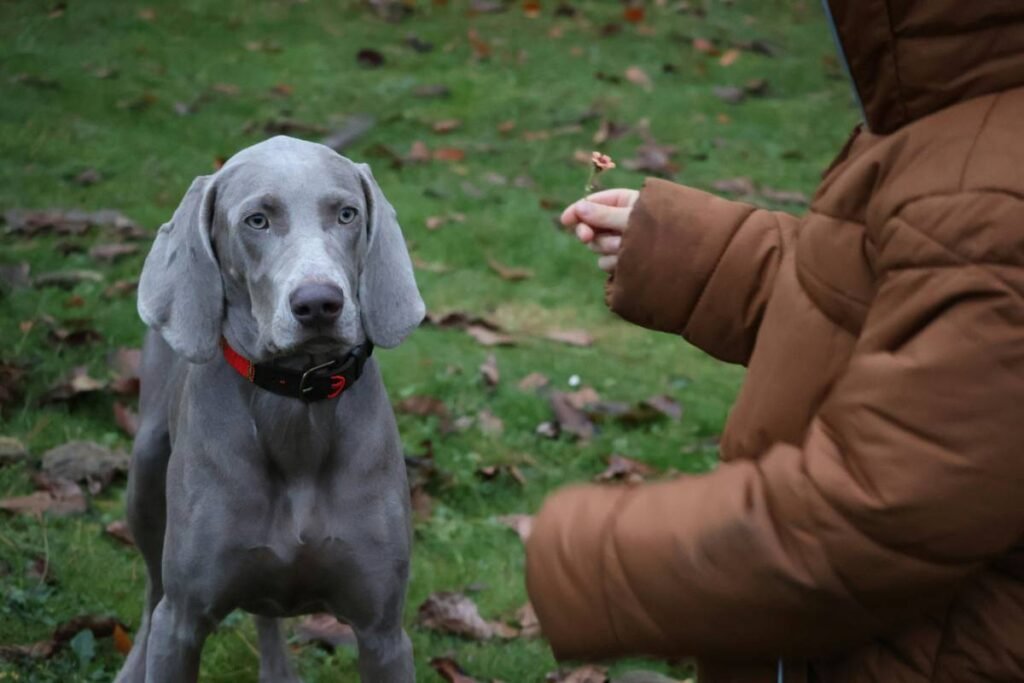
Ever stood in your backyard, shouting your dog’s name—only to realize they can’t hear you? If your pup is deaf, traditional verbal commands are useless. But what if I told you there’s a way to communicate using touch, rhythm, and vibration that builds trust faster than “sit” ever did?
In this guide, you’ll learn exactly how to use vibrational cues to train a deaf dog—not just as a backup plan, but as a powerful, respectful training method rooted in science and empathy. We’ll cover why vibration works, step-by-step techniques, common pitfalls (like the time I scared my rescue pup by stomping like a T-Rex), and real success stories from trainers who’ve transformed anxious deaf dogs into confident companions.
Table of Contents
- Why Vibrational Cues Matter for Deaf Dogs
- Step-by-Step Guide: Vibrational Cue How to Train a Deaf Dog
- 5 Best Practices for Long-Term Success
- Case Study: Luna’s Transformation from Fearful to Fearless
- FAQs About Vibrational Cue Training
Key Takeaways
- Vibrational cues leverage a deaf dog’s heightened sensitivity to ground vibrations and touch—making them highly effective for recall and attention.
- Stomping, vibration collars (humanely used), or tapping surfaces create consistent signals that replace auditory commands.
- Always pair vibrational cues with positive reinforcement—never punishment—to build trust and reduce anxiety.
- Consistency, timing, and calm energy are more critical than volume or force.
- Deaf dogs aren’t “less capable”—they’re differently abled, and with the right approach, they thrive.
Why Vibrational Cues Matter for Deaf Dogs
Deafness in dogs isn’t rare—up to 5–10% of white-coated breeds like Dalmatians and Bull Terriers are born deaf in one or both ears (Strain, 2004, Journal of the American Veterinary Medical Association). And while many owners assume deaf dogs are “harder to train,” the truth is they often excel when taught through visual and tactile channels.
Here’s the secret: dogs don’t rely on hearing the way we do. Their primary senses are smell and vibration detection through their paws and jawbones (yes, really—they feel ground tremors via the ossicles in their inner ear, even if they can’t process sound). That means a gentle stomp on the floor isn’t noise—it’s a signal.
But—and this is critical—you can’t just start banging on the floor like you’re summoning Thor. Done wrong, vibration becomes fear. Done right? It’s connection.

Optimist You: “This could be game-changing!”
Grumpy You: “Ugh, fine—but only if coffee’s involved… and zero yelling.”
Step-by-Step Guide: Vibrational Cue How to Train a Deaf Dog
Step 1: Establish Baseline Calm
Before introducing any cue, your dog must associate your presence with safety. Spend 5–10 minutes daily doing quiet bonding: hand-feeding meals, gentle massage, or simply sitting together. Stress blocks learning—especially in deaf dogs who may already feel disconnected from their environment.
Step 2: Choose Your Vibration Signal
Pick one consistent method:
- Foot stomp: Barefoot on hardwood/carpet—gentle but firm pulse (not a jump).
- Floor tap: Use a wooden spoon or knuckle on laminate.
- Vibration collar: ONLY humane, non-shock models like the PetSafe Vibra™ (set to lowest setting).
Never mix signals early on—confusion breeds frustration.
Step 3: Pair Vibration with a Visual Marker
When you create the vibration, immediately show a clear hand signal (e.g., open palm up = “come”). This bridges the tactile cue with intentional action. Repeat 5x per session, max twice daily.
Step 4: Reward Instantly—Within 1 Second
The moment your dog looks at you or moves toward you after the vibration, mark it (“Yes!” with sign language or a thumbs-up) and reward with high-value treats (think: boiled chicken, not kibble). Timing is everything—delayed rewards teach randomness, not cause-and-effect.
Step 5: Generalize & Proof
Once reliable indoors, practice outdoors on leash. Then add distractions (other dogs, squirrels, kids). Always lower criteria when increasing difficulty—success builds confidence.
5 Best Practices for Long-Term Success
- Never use vibration to punish. It should always mean “good things happen”—not “you’re in trouble.”
- Keep sessions under 5 minutes. Deaf dogs fatigue faster mentally; short = sharp focus.
- Avoid startling wake-ups. Gently place your hand near their nose so they smell you before touching—never shake or yell.
- Use a “check-in” vibration. A soft tap during walks reminds your dog to look at you—preventing bolting.
- Track progress in a journal. Note triggers, successes, and setbacks. Patterns reveal what’s working.
⚠️ Terrible Tip Disclaimer: “Just stomp harder if they ignore you.” NO. Louder ≠ clearer. Force creates fear. Period.
Case Study: Luna’s Transformation from Fearful to Fearless
Luna, a 2-year-old deaf Australian Shepherd, arrived at my foster home trembling, hiding under furniture, and lunging at sudden movements. Her previous owner gave up after she failed “obedience class.”
We started with Step 1: calm bonding. No commands. Just sitting, breathing, offering treats from an open palm. After 3 days, she’d take food. Day 7: first tail wag.
Then came vibration. I used a barefoot stomp on hardwood paired with an open-palm “come” sign. First attempt? She flinched. So I backed off—used softer taps near her bed instead. By Week 2, one stomp = head turn. Week 4: full recall from 20 feet away in the yard.
Six months later? Luna passed her CGC (Canine Good Citizen) test—and now works as a therapy dog at a children’s hospital. All because we spoke her language: touch, not tone.
FAQs About Vibrational Cue Training
Is a vibration collar necessary?
No. Most deaf dogs respond beautifully to natural vibrations (stomps, taps). Collars are optional tools for off-leash reliability—but never a shortcut. Always prioritize trust over tech.
Can puppies be trained with vibrational cues?
Absolutely. In fact, early training prevents anxiety later. Start gently at 8–10 weeks with light floor taps during play.
What if my dog ignores the vibration?
Check these: 1) Is the surface dampening vibration (thick rug)? 2) Are you pairing it with a visual cue? 3) Is your dog in pain or stressed? Rule out medical issues first.
Do vibrational cues work for senior deaf dogs?
Yes—but go slower. Older dogs may have arthritis, so avoid sharp impacts. Try vibrating your hand on their back instead of stomping.
Conclusion
Vibrational cue how to train a deaf dog isn’t just about obedience—it’s about dignity. These dogs aren’t broken; they’re brilliant in a different dialect. By using thoughtful, consistent tactile signals paired with joy, you’re not teaching commands. You’re building a silent conversation built on respect.
Start small. Stay patient. And remember: every stomp, tap, or hum through the floor is a whisper saying, “I see you.”
Like a 2000s flip phone, your deaf dog doesn’t need bells and whistles—just clear, consistent signals that say “you’re safe.”
Haiku:
Paws feel earth’s soft song,
No bark, but love shakes the ground—
Deaf hearts learn to trust.